Leadership It Starts at the Top
Are we leading from the front when it comes to our teams? Strong leadership is the common denominator when it comes to high-performing teams in our industry – and there’s a difference between management and leadership. Rebecca Greaves reports.

Listen to the podcast:
When asked to pinpoint the most important factor when it comes to people, Pāmu Chief People, Safety and Reputation Officer, Bernadette Kelly, doesn’t hesitate – leadership, hands down.
Pāmu is the country’s largest farmer, and therefore a large employer, people are a key factor to the success of the business, and recruitment costs time and money. The same goes for small businesses with fewer employees – the cost of making the wrong choice, or not looking after your staff, is expensive, and it affects the whole team.
In December 2021, the state-owned farmer could expect up to 28% annual staff turnover. Now, the rolling average sits at about 17% annually, a reduction of about 70 people a year. As she points out, when you’re not constantly recruiting, you have more time to spend on your existing team.
Asked the key to turning the numbers around, Kelly puts it down to better leaders. Of course, there are other important factors, but leadership is huge, she says. “We have done a lot of things, including pay equity between males and females, but that wasn’t why people were leaving. I think it comes back to how you treat your people and the better leaders we have, those who want to develop their people and understand them, the better we do.
“A lot of people leave jobs because they don’t like their boss or their boss’s leadership style.”
Pāmu has emphasised developing better leaders through the introduction of two leadership programmes. “A lot of people want to move up and make more money, they might take a manager’s position, but they don’t know how to lead.”
The first is a modularised five-day programme, spread over 12-18 months, for anyone in the business who leads people. “The first module is about you. Before you can lead others, you need to know who you are. There’s a difference between talking to think and thinking to talk, and I believe it’s an important distinction. It’s about giving them the tools to get the best out of their staff, and how to communicate with them.”
Internal promotion and career progression is important to Pāmu, and the second programme is for those in 2IC roles. “They are our future farm managers and it’s about getting their confidence up so that when a manager’s role does come up, they’re ready to go.”
Equally, Kelly says they love boomerang employees, and they also encourage people to leave Pāmu, for the right opportunity. “It’s important that people can see a pathway, if they do want to move up. Being a manager is not for everyone, and being a really great 2IC or head shepherd is important to us too.”
Agriculture as a workplace is unique, people don’t just work on a farm, it’s their home. Kelly is acutely aware of the need to get it right. Fitting into the community and placing emphasis on family and work-life balance can have a bearing on the value an employee attaches to a job.
“I think that’s our underplayed strength, as an industry. People want to raise their kids on a farm, to have that lifestyle. I think it can be an asset. It can be difficult, but rural communities and that sense of belonging, having a home – we don’t sell that enough as an industry.
“Leaders get to know their staff and their families, let them go and watch the school play if it’s not busy, understand that people have a life outside of work – it is possible to have flexibility in this industry, within reason.”
“We take time to have fun. Leading into weaning we go and have a round of golf, for example. It’s important to have a laugh. Life can be tough and serious, so we just focus on the things we can control.” Fraser Avery, farmer
But it’s not just leadership. The number one non-negotiable at Pāmu is keeping people safe, and that’s been a significant culture shift. People at Pāmu make good safety decisions
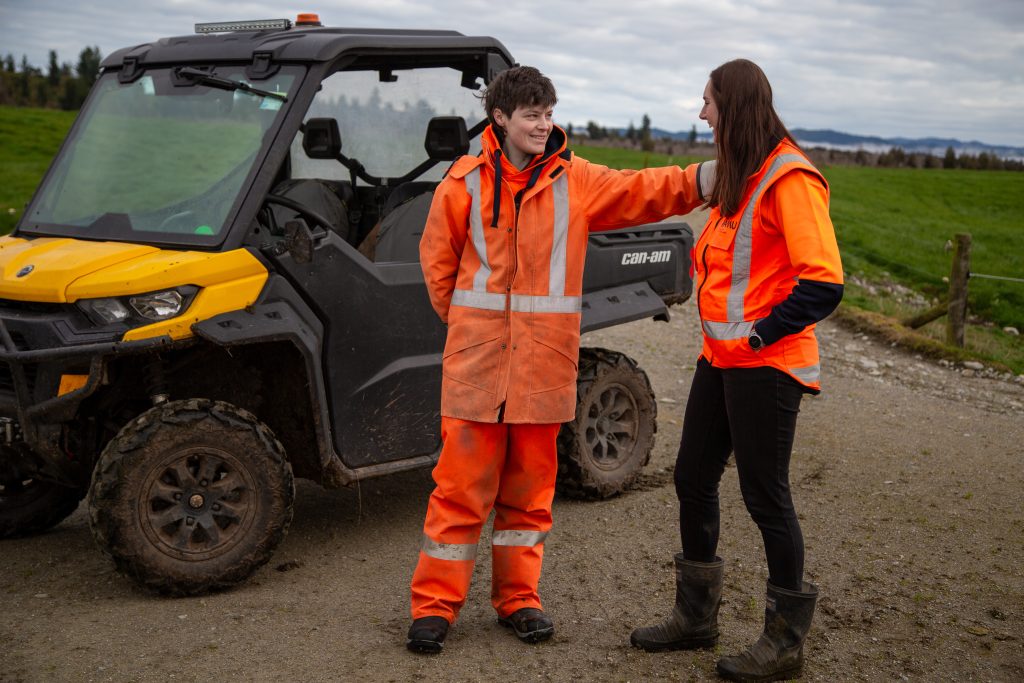
every day, she says. Kelly knows Pāmu is in a privileged position compared to a small mum-and-dad operator and some of their practices may be scoffed at, such as wearing high-vis clothing and doing away with quads in favour of side-by-sides.
“There are legitimate business and people reasons for high-vis. It’s like putting on a safety uniform every day and it helps with things like finding people after an accident. Quads without crush or rollover protection, helmets, training or when used for the wrong job are not safe. Too many people die on farms. For us, it’s about giving our people the right tools to do their jobs.”
Along with leadership and safety, there are what Kelly refers to as ‘hygiene factors’, such as not getting paid on time or substandard housing. “Those things that annoy people, but are really important. At Pāmu, people get paid on the same day, every time and they know we are paying them fairly. Having warm and dry houses, they don’t need to be the fanciest houses in the world, but a home that meets the healthy homes standard. Of course, we’re not perfect, but these foundational things, I think we do pretty well.
“I believe no one gets out of bed aiming to come to work and do a bad job. Everyone comes with good intentions. It’s about giving them the best environment to do that.”
Pāmu has also taken positive steps to address pay quality and the gender pay gap, increasing the number of women in senior positions and encouraging them to come back after parental leave. Introducing set rates for each role eliminated pay inequality and, currently, the gender pay gap is in favour of women. “We have a plus or minus 3% target and it does move around, last year it was in favour of men, but it shows us we have a handle on it. The things we are doing are working,” Kelly says.
“We make sure it’s the right person for the job, but it’s giving women the opportunity to get to the start line, putting them on leadership programmes, putting them in a position to win.”
The upshot of all of this? If you take care of the basics, staff are likely to be grateful, loyal and engaged. And engaged employees will always go above and beyond.
Empowering people
For 2019 Nuffield scholar and Marlborough farmer, Hamish Murray, the realisation that people like to solve their own problems was a lightbulb moment. He sees his role in building a team on the Bluff Station as more about coaching and mentoring than leading. “That was the biggest realisation, or change in my mindset, and I now see my role as coaching people to solve their own problems,” he explains.
Murray and wife Jess farm in partnership with Hamish’s parents on the vast, breathtaking and sometimes unforgiving high-country station at Kekerengu, which stretches into the Clarence Valley. They run 6500 merino, 1000 cattle and have 800 beehives and a team of seven to eight people.
Hamish reached burnout point on the back of a punishing drought that pushed him to his limits. All his energy was going into surviving the drought, and he struggled to keep his team going. He knew there had to be a better way.
With the help of a coach, he focused on how to better lead himself first. This led on to how to better lead his team. His 2019 Nuffield was titled Future Farm Workplaces – The future of the work for agricultural businesses. “It started out being about attracting people to agriculture, however quickly moved to looking at ourselves and being aware of who we are as leaders, and then on to what makes teams more efficient, effective and engaging. I went on that journey of awareness and self-discovery.”
Rather than think about how his staff can serve him, Murray has flipped it on its head and seeks a relationship that’s of mutual benefit to both parties. “As farmers, we think about our team and it’s our job to help them to achieve their goals. Being aligned in your purpose and values, having clear roles and communication is vital, and life is a journey. I want our employees to get the most of their situation and opportunities while they are with us and, hopefully, in return we will get the most out of them.”
These days, information is abundant and to give an example, almost anything can be solved by searching the internet. “Young people don’t want to be told, ‘this is how you do it’. They want to be given the resources to figure it out for themselves, so they can learn it forever. It’s not a lead and follow scenario anymore. There’s a place for working hard and showing commitment to get a tough job done, but it’s just as much about coaching and mentoring.”
Murray says it’s also about asking questions, better questions and creating an environment of psychological safety. By this he means creating a space where staff feel able to be fully themselves, rather than who they think you want them to be.
“We take time to have fun. Leading into weaning we go and have a round of golf, for example. It’s important to have a laugh. Life can be tough and serious, so we just focus on the things we can control.” Fraser Avery, farmer
One of the things they place emphasis on at the Bluff Station is their common purpose and vision. Through a facilitated team session, they came up with the values of share, enjoy and grow. It’s easy to write a vision down, the real wins come from making it tangible and applicable to real life. While the vision needs to be refreshed as new people join the team, Murray reckons you know you’ve succeeded when the vision and values stop feeling like work, they are simply part of everyday life.
For example, their share value means many things. It could be sharing a jar of honey or leg of lamb for visitors to take home, sharing baking at smoko or sharing the property with friends and family. Sharing the property isn’t just for Murray’s friend and family, staff are encouraged to invite theirs, too.
When it comes to attracting new people to our industry, he says we need to put ourselves in their shoes. “For those of us in agriculture, we know it’s a great place, why would you want to do anything else? We need to look at it from the point of view of those who have little experience of our industry and ask, why would I want to get involved?
It comes down to the environment you create and considering what young people are looking for. How can we make it fun, enjoyable, engaging and motivating?
Creating a team
Marlborough farmer Fraser Avery echoes Kelly and Murray’s sentiment that before you can effectively lead a team, you must work on yourself.
Avery runs a team of up to seven staff at Bonavaree, Grassmere, and the people factor in our industry is something he’s happy to talk about. “People is something I’m pretty passionate about. We don’t claim to be the best, but my thinking in this space is heading in the right direction. It’s a constant work on, and we are pretty proactive. Ultimately, we want people to be able to come to work and be 100% themselves.”
Avery believes it starts with us individually as employers, not just for farmers, but for people from all walks of life. “It’s very easy to blame others for our shortcomings and that’s probably the biggest opportunity I see. When we come into farming, we’re taught about growing grass and managing animals, maybe some financial training, but very few of us get any people training.”
Learning to manage himself and working on his own head space made him realise he needed people around him to succeed. “We’re only as good as those around us. I’m open and honest, I believe in vulnerability and hope people can approach me at any time. If you give people psychological ownership, they feel part of the team and included.”
Avery sees his staff as an extension of family, and he includes his wider team in that, from his meat company rep to his vet. “When they interact with us, we do everything we can to make it enjoyable, so they want to be part of our team here at Bonavaree.”
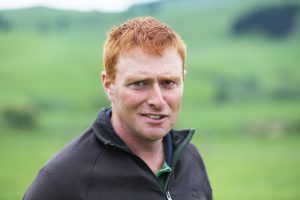
Bonavaree’s location isn’t particularly attractive to prospective young employees, Avery says, as there aren’t many other sheep and beef farms in the area, nor does it have the allure of the high country. He’s had to work hard on becoming an employer of choice. Communication is key, from attracting the right person to ensuring they understand the role. Supporting new staff with good induction and on-boarding is vital, he says.
Every week the Bonavaree team has a staff meeting, usually on a Monday, unless there’s an important job on, like loading a truck. On Sunday, an email is sent to everyone with a weekly plan and insight into what will be happening the following week. Every team member has an opportunity to talk at the meeting, and they finish with an appreciation session.
On the weekly planner they also have a list of non-negotiables. Health and safety is top of the list, along with things like honesty, punctuality and use of FarmIQ. Appreciation was recently added after Avery did some personal development work. It’s a chance to acknowledge someone, whether it’s a child, partner or team mate, for something they have done.
He says it has had a positive impact, and believes it could be utilised in every workplace.
It may seem a little controversial, but personal development is the first thing to be added to the weekly diary.
“We have done a lot of things, including pay equity between males and females, but that wasn’t why people were leaving. I think it comes back to how you treat your people and the better leaders we have, those who want to develop their people and understand them, the better we do.” Bernadette Kelly, Pāmu
If there is a Beef + Lamb New Zealand field day or course to attend, these things are plugged in first and they make the work fit around it. When he’s recruiting new staff, values and attitude are far more important than experience, Avery says. “Experience is a bonus, but not necessary. Values are everything. Someone who is willing to learn and grow will fit into the team.”
The Averys also actively encourage their staff to play sport or pursue hobbies, and support community involvement. They’re not afraid to organise social events and get staff off-farm during work hours.
“We take time to have fun. Leading into weaning we go and have a round of golf, for example. It’s important to have a laugh. Life can be tough and serious, so we just focus on the things we can control.”
Avery knows talking about this sort of thing isn’t everyone’s cup of tea, but he believes this is where the gold is, and the industry can reap the rewards from investing in our people.
“It’s about being open. It’s not necessarily a comfortable position for rural men, but being prepared to learn from others and share the knowledge we have is a special, powerful space. Too many of us are too scared to go there.”
Fraser’s key takeaway messages:
- Work on yourself first
- Communication is key, have a good induction and on-boarding process
- Weekly team meeting and appreciation session
- Make time for personal development for you, and your team
- Regular team building exercises e.g. round of golf, ten pin bowling
- Support and encourage staff hobbies/sport/community involvement