Insurance premiums surge as global risk rises and inflation bites
No farm business would have missed the significant increase in the cost of insurance in the past year. Tony Leggett investigates what’s behind the increase and the options for reducing the cost in the future.

Aseries of devastating weather events and a sharp rise in inflation is behind eye-watering increases in the cost of insurance in recent years for all New Zealanders.
All farm businesses have been hit with big increases in insurance premium charges. Getting a fix on how large the increases are is difficult but some farm businesses are reporting it could be 20% or more in the past year.
A recent analysis by farm consultancy business BakerAg found premiums for one sheep-beef business client had increased by 83% between its 2020–21 financial year and the forecast in 2024–25 for the same level of cover across the same asset mix.
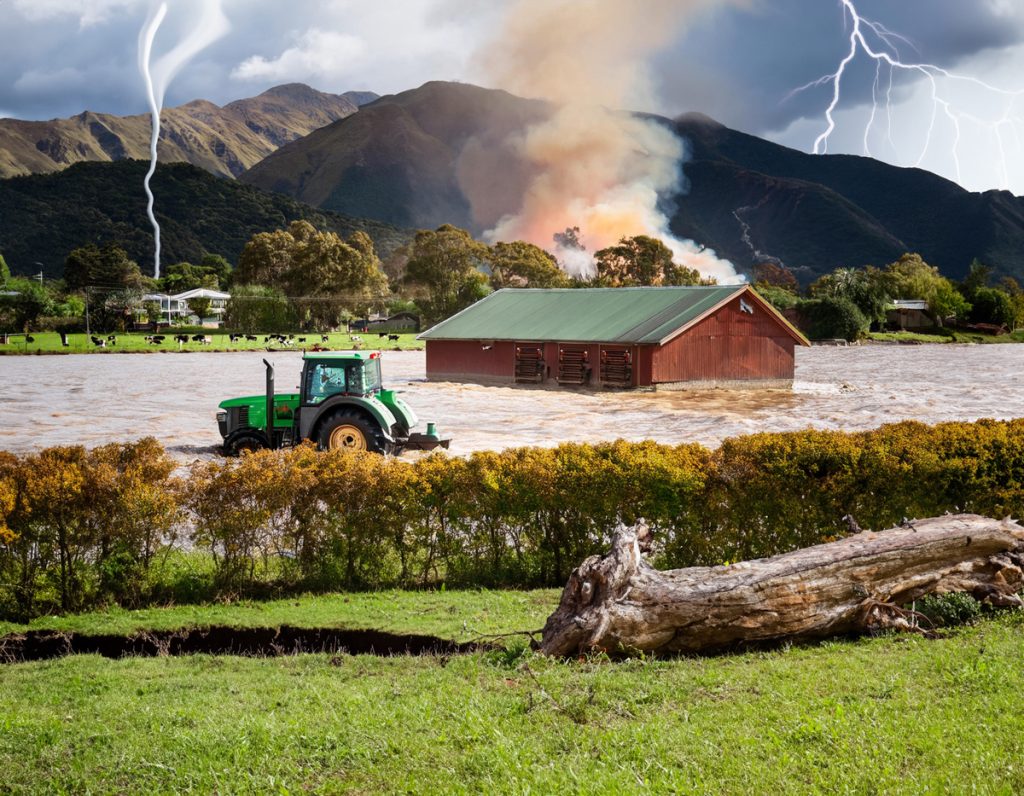
Global news is full of coverage of disasters and damage caused by flooding and wildfires. Weather events seem to be increasing in frequency and intensity, and on a larger scale across many countries.
New Zealand is not immune to the same extreme events. Parts of the North Island last year experienced two of the most significant weather-related events in decades and both had a big flow-on impact on the cost of insurance premiums for farm businesses.
Widespread flooding occurred over the upper North Island during the Auckland Anniversary Weekend and this was followed soon after by Cyclone Gabrielle which wreaked havoc on the North Island’s east coast, resulting in five deaths and pushed the total cost of damage from extreme weather to just under $4 billion for the 2023 year. To put that in context, the cost in the 2022 year was just $351 million, less than 10% of the 2024 year.
The severity and frequency of these types of events is changing the risk profile of NZ when local insurance providers buy what is called “reinsurance”.
Reinsurance is a word often mentioned after major events or in a breakdown of the key factors which make up an insurance premium (see breakout on what makes up a premium).
Reinsurance is insurance for insurers so they have their own set of insurance policies to protect themselves against the financial implications of one-off major events, like flooding, cyclones or earthquakes.
It is purchased on a global market and, to give some indication of its growing importance to the insurance sector, it is expected to triple in size within the next decade, from US$642.37 billion in 2023 to reach around US$2000.08 billion by 2034.
When an event like Cyclone Gabrielle occurs, insurance providers use reinsurance to recover part or all of an insurance payout from their reinsurer.
Insurers use the additional financial cover to help make sure there are enough funds available to pay out their customers’ insurance claims and also reduce the risk of falling into financial difficulty as the result of a major event.
Part of every customer’s insurance premium goes towards covering their insurance provider’s reinsurance. As the number and cost of weather events and natural hazards increase, so does the cost of reinsurance and, therefore, the amount of premium charged to customers.
Keeping these global reinsurers willing to invest in the NZ market could be an increasing challenge, given the rising frequency and severity of weather and wildfire events in recent years.
Steve Johnston, the boss of trans-Tasman insurance company Suncorp Group, was reported in late September saying he had to convince its reinsurers to keep providing cover for policies offered by its NZ subsidiaries, Vero and AA Insurance.
He said Suncorp New Zealand’s reinsurance costs rose by 36% in the past financial year because of the magnitude of the 2023 weather events.
Insurance companies already limit new business in areas where they already have a large concentration of risk or they want to reduce the financial risk to the business if a major disaster strikes.
With sea levels forecast to rise as the climate warms, some insurers are already either insisting on much higher excess levels for homes and buildings cover, or excluding homes and buildings in some coastal areas.
Inflation is also influencing the size of premiums paid for insurance cover. According to Statistics New Zealand, insurance cost inflation rose by 14% in the year to June 2024, making it one of the most significant contributors to the consumer price index (CPI).
Insurers are dealing with rapidly increasing costs for repairs or replacement of damaged and lost items or infrastructure.
Even lower-value items typically covered on a replacement cover, such as vehicle windscreens or mobile phones, have more technology built into them than before, so the cost of replacement has significantly increased.
Also contributing to premium costs is the impact of fraudulent claims, estimated by the Insurance Fraud Bureau New Zealand at $994 million for the year to date. Fraud ultimately costs clients through increased premiums.
Breaking down the premium cost
Just 46% of a total insurance premium typically remains with the insurer providing the cover according to the Insurance Council of New Zealand.
It says about 12% pays for reinsurance cover bought on a global market by an insurer to protect itself against the financial impact of one-off major events, like flooding, cyclones or earthquakes.
The balance of a premium comprises government levies and taxes – Fire and Emergency New Zealand levy (5%), Natural Hazards Commission levy (24%) and GST (13%).
The Natural Hazards Insurance (NHI) levy is collected by all insurance companies on behalf of the Government and helps fund earthquake and other natural hazard insurance cover provided by the Natural Hazards Commission (NHC). Insurance companies include them in their premiums and ensure they’re passed on to the Government.
The Fire and Emergency New Zealand (FENZ) levy is collected by all insurance companies on behalf of the Government and funds FENZ to deliver fire and emergency services to all New Zealanders. Insurance companies include them in the premium you pay and ensure they’re passed on to the Government.
In NZ, the Natural Hazards Commission (NHC) provides first-loss insurance to landowners for most natural hazard risks. Cover is capped for insured homes and residential land, and private insurers can provide additional cover above that amount if required.
NHCover and EQCover are the Government’s natural hazards insurance provided by the Natural Hazards Commission for homes and some residential land. Claims lodged after July 1, 2024, fall under the Natural Hazards Insurance Act 2023 and are known as NHCover claims. Those lodged before July 1 this year fall under the Earthquake Commission Act 1993 and are known as EQCover claims.
For commercial buildings, including those on farms, the National Hazards Commission levy is based on the sum insured rather than the flat fee set for domestic buildings.
The FENZ Levy for farm buildings is also based on the sum insured and for vehicles, fees vary based on the weight of the vehicle.
Dairy farm business needs
Dairy farm businesses should be insuring farmhouses, the domestic contents of the farm owner’s family, farm buildings, farm contents, business interruption, milk for spoilage, contamination or non-collection, and liability insurance.
Milk contamination liability is a must and covers the farm business in situations where contaminated milk is picked up by the tanker and mixes with uncontaminated milk from other farms on the collection round.
Depending on a farm owner’s appetite for risk, they may opt to self-insure smaller, easily replaceable buildings, or lock in higher excesses on them to reduce premium costs.
Farm employees should have their own domestic contents insurance, but their farmhouse needs to be covered to an appropriate level for loss or damage.
Livestock insurance is also available on dairy cows but is used mostly for high-value stud animals.
Insurance to cover business interruption is recommended for dairy farm businesses to provide cover for when an event prevents the milking shed from being used. Liability insurance for the farm business and its employees is always recommended.
Brokers ensure competition and best fit for farm insurance.
Independent brokers play a key role in the insurance sector, bringing competition and the experience required to match the right package of cover to the specific needs of a farm business.
Experienced insurance broker Matt Stent says one of the biggest advantages for any individual or business is the advocacy and knowledge brokers offer when a client has a claim.
“You get direct access to your broker at claim time, they work for their client, collecting all the information for the insurer and then they advocate for their client to achieve the best settlement possible,” he says. “If a claim has been declined or a limit is reached, then the broker is there to explain the reasons for that too.”
The personal service offered by brokers is available directly from most insurance companies, but most apply a premium threshold which determines if a farm business is assigned a representative or they are channelled into an online “self-help” process or 0800 call centres for advice, claims and feedback.
Stent says brokers should provide a detailed assessment of a farm’s insurance requirements, captured during an initial site visit, before quotes are sought from multiple insurers. This means farmers avoid the need for arranging quotes from several providers or working directly with one insurer and not seeing what others might offer for the same package.
By working closely with a farm business owner, he says a broker is able to discuss whether the standard provisions on offer from most insurance companies are sufficient or not.
“Then you can work with them on their risk profile to tailor the package to their specific needs by working together on setting excess levels and whether they want to do some sort of self-insurance.”
He favours at least an annual site visit and review unless an event triggers the need for intervention.
“It’s amazing what you see when you actually go to someone’s farm or site. Even if you’re just preparing a quote for new business and you’re walking around with the client, you often see items that are not covered by existing insurance policies.”
Stent works closely with two rural insurance providers, Vero and NZI, to provide cover for his clients. Some insurance firms will only deal directly with clients rather than through brokers.
Brokers are paid commission by the insurance company and this is factored into the premium. The fee percentage varies depending on the insurer and the items being insured, but they must be fully disclosed every time. Stent says some brokers charge administration fees on top of the commission they receive, but these must also be disclosed.
Not having all items insured and sufficient cover is an issue for most businesses, and farms are no exception, Stent says.
“Whether it’s just not updating the sums insured or they are missing something off their insurance policy that should be on it, a lot of farms will be under-insured.”
More than $4 billion in insurance claims has been paid out following the 2023 Cyclone Gabrielle event which devastated the North Island’s east coast regions. But many farm businesses were still caught out by not having all their buildings, contents and livestock covered appropriately.
Stent says under-insurance is driven by genuine errors in collating all the items to insure or farmers taking the risk not to insure items. When cash is tight, it’s understandable that farmers will look to reduce their spending and consider their risk appetite for bearing the cost of replacing items lost, damaged or stolen.
“It’s about weighing up the risk on something lost once in a 100-year event against not having to pay the insurance premium for the 100 years.”
As the old saying goes, insurance is a cost until you need it.
“It is a necessary evil in a lot of people’s eyes. It’s not until they have a big event and have a large claim or a loss that they actually appreciate it,” Stent says.
Ways to tweak farm insurance costs
Regularly reviewing the “sum-insured” values for all the assets owned by a farm business and increasing the excess levels on some items are good strategies for reducing insurance premiums.
Experienced independent broker Matt Stent says ensuring values for each asset category covered are insured to the correct level or limit should avoid the risk of over-insuring items.
“This is especially important for assets that depreciate like vehicles and tractors because they’re generally on a market-value policy. If you’re not reviewing those sums insured, you will be paying a premium based on that higher value and you will not get paid out for that if you have a total loss to claim,” he says.
There are some online tools available for valuing vehicles, including on the Trade Me platform.
“The annual review is a great time to amend sums insured on buildings, vehicles, and other limits to make sure that at claim time you’re not going to be blind-sided.
“Building values, generally speaking, for reinstatement should be increased in line with inflation and increases in building costs. But vehicles are mostly on a market-value basis for settlement, so their values should be reduced to match that as they depreciate.”
He also advises keeping the excess level for contents cover at a lower level because claims tend to be more frequent.
“But when insuring a house, you can increase it from the standard $400 to $1000 or even $5000 because a claim for your house is generally going to surpass that level anyway. And remember, $5000 is about one square metre of a house rebuild cost these days in many areas of the country,” he says.
Packaging all the farm’s insurance needs and offering it to a range of insurers can also deliver savings in premiums.
“It also gives you more sway with insurers when they have your total business. They will look after more because they don’t want to lose you, and there are discounts on total premium cost too.”
Having a farm security system in place along with fire protection and well-maintained buildings that are secure is also a bargaining point in premium setting discussions.
As a minimum, a fire-only or fire and burglary policy on farmhouses still qualifies for cover in a natural disaster through the Natural Hazards Commission.
It could also be worth considering if a farmhouse was burned down, would it be replaced or is there sufficient staff accommodation available, or if it would be replaced with a home of the same or lesser size and standard?
In the same way, would the farm’s main home be replaced with a similar-sized or specification home if it was lost through fire? Insuring to a set value could make good financial sense if there is scope to scale back to a more modest-sized new home.
Insurance reviews might be considered a low priority task by many farm business owners, until they endure a major event like an earthquake, fire or flood. It is essential to be well prepared for annual reviews, and to ensure you are aware of your insurance needs and existing policies.