Hand-held tool to measure micron
Groundbreaking Australian-based technology is reshaping the way New Zealand merino growers will, in real-time, provide micron testing at shearing, as well as prove its provenance to the end consumer. Words Sarah Perriam-Lampp
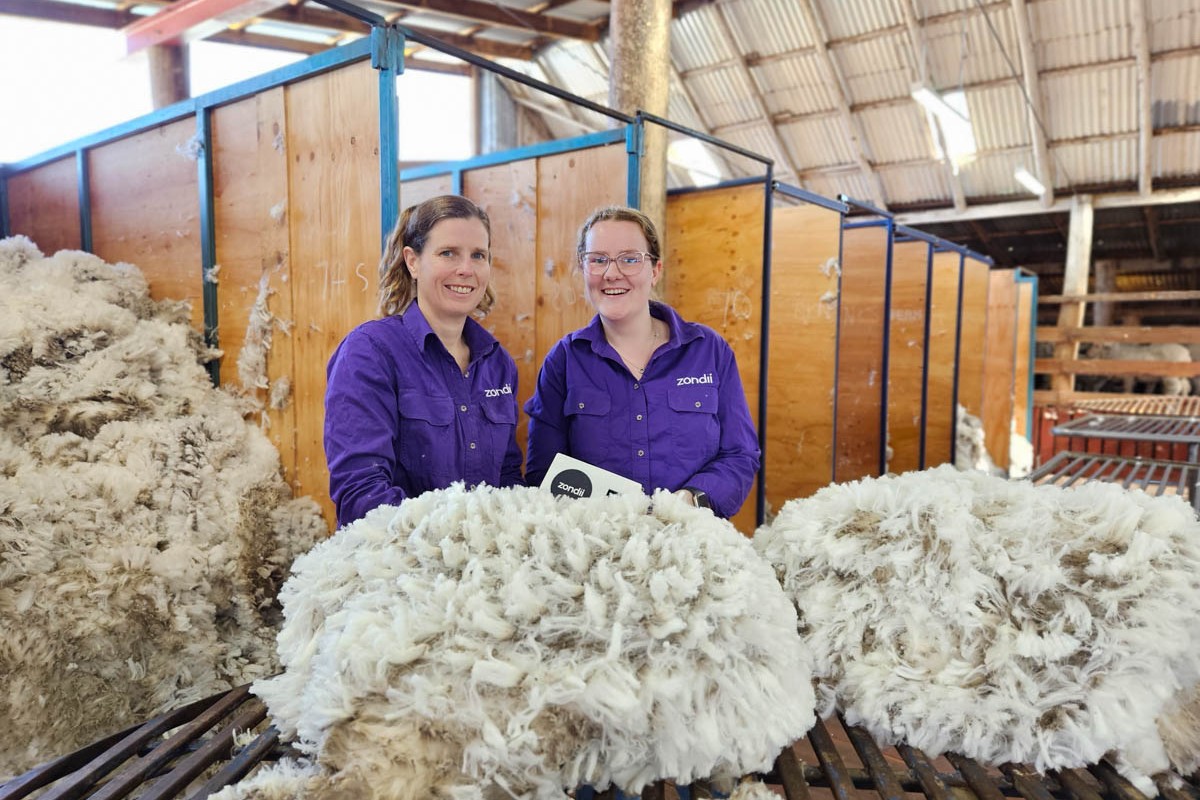
Being able to test micron in the woolshed, as soon as it comes off the sheep, could be a game-changer for the merino industry in this country. And all you need is a smartphone.
Originally developed in partnership with German research and development company, Fraunhofer, to scan an apple to tell if it was organic and where it was grown, the hyperspectral imaging smartphone technology developed by Zondii provides a spectral fingerprint of food and fibre.
For wool, there has been previous research from the Australian Future Fibres & Innovation Centre with a tool called the Wool HandleMeter in 2015. This was able to detect differences between fabrics composed of superfine wool differing in fibre curvature, with lower fibre curvature wool fabrics. However, this laboratory-based technology is expensive and Zondii has been able to create a non-expensive spectral device to get the data in real-time in the woolshed, by point-and-shoot from a smartphone.
In 2022, Australian Wool Innovation teamed up with the Australian start-up to investigate whether the company’s patented Artificial Intelligence and imaging technology could successfully be used to measure wool’s micron, and potentially colour and crimp.
The result was a project to develop a simple device for onfarm fibre measurement (OFFM), a tool that attracted a waitlist of over two million sheep before the official marketing campaign even began.
Danielle Morton, co-founder of Zondii, has been impressed by New Zealand growers’ understanding that micron data influences end quality, breeding decisions and farm gate sales. “As New Zealand merino growers are so advanced in their understanding of the full supply chain it makes it easier for Zondii to work effectively with Devold NZ to be that one extra tool in their toolkit to simplify that process,” she explains.
The ability to trace wool from the farm gate to the end product empowers consumers with information about the ethical, sustainable, and caring practices involved in producing the garments
they purchase.
Traditionally, wool is baled together and sent to the wool store, where a core sample is taken and tested for micron. They then wait weeks for the results, before it is auctioned. Merino growers may take side samples from the sheep and get their own testing done or in the woolshed. At stud merino shearing they will scan the EID tag of the sheep and weigh the fleece to capture fleece data for progeny information of the rams they are selling; yet the micron testing still may take weeks, and is extra inputting later on.
For Devold NZ General Manager Craig Smith, the micron testing in real-time in the woolshed is just one exciting tool for breeders but the potential technology Zondii provides to line up with their ‘sheep-to-shop’ traceability story to consumers is the ultimate. “As a brand of premium outdoor activewear, we can only do that if we know the raw ingredients right at the beginning. Imagine if we can market garments in vintages like a great wine – knowing the variety and the climatic conditions it’s been grown on … then you’ve got a point of difference,” he says.
Project Officer for Zondii’s wool micron technology Ellie Bennett, says this is very clearly in alignment with fashion trends and legislation in the US. “There is a lot of new emphasis on traceability coming at the wool industry, such as The Fashion Sustainability and Social Accountability Act set to be implemented in 2025, which says New York will be the first state in the US to hold big fashion brands accountable for their social and environmental impacts.”
The requirement to satisfy this consumer demand will be paramount for farmers to record and showcase how the product is ethically and sustainably sourced, she says.