Gaining credit for nature
Mitigating the risk of New Zealand’s unique wildlife, plants and habitats disappearing is at the heart of a proposed biodiversity credits system. Words Phil Edmonds
Two significant pieces of government-funded and internal policy work this year have created a groundswell of interest in the potential emergence of a biodiversity credits system to help address the degradation of New Zealand’s natural environment. Both suggest farmers could be financial beneficiaries from such a system. But there’s plenty of fish hooks in the way, not least the new coalition Government’s unknown commitment to the idea.
To date, formal farmer investment into enhancing biodiversity has been largely based on land-owning individuals with enthusiasm to do what’s right being supported in some way by similarly minded philanthropists.
It is widely regarded, though, that this ad-hoc system of funding land use change is not going to meet the needs of mitigating the risk of NZ’s unique wildlife, plants and habitats disappearing. The mismatch is what prompted the Our Land and Water National Science Challenge Options for Rural Investment project, carried out by Perrin Ag and GHA Chartered Accountants.
Co-author of the report Carla Muller said the research undertaken to explore alternatives unsurprisingly found some types of land-use change struggling to obtain the necessary funding to get them off the ground.
The report identified biosecurity credits showing at least as much promise as other possible solutions. “It is the solution that has the most opportunity, with its key point of difference being the ability to incorporate many people. It eliminates the need for a farmer to try and find a willing investor,” she said.
The previous government came to a similar conclusion. Earlier this year the Ministry for the Environment opened a public consultation on proposals for a biodiversity credit system. Justifying the need to consider a means to address the risks identified above, the consultation documents stated that “we can’t rely on government funding and the goodwill of landowners to address these emerging challenges”.
Among the reasons the government considered biodiversity credits to be the option worth testing ahead of others were consistent with those identified in the Our Land and Water report – primarily its ability to efficiently mobilise investment to support landholders with protecting, maintaining and restoring indigenous biodiversity.
On the face of it, a biodiversity credit system does look like the most obvious means to attract the widest possible pool of investment. It is also a solution that advocates have not been shy in pointing out farmers could be significant winners.
Muller said there is huge potential for farmers. Instead of the need to search far and wide for suitable and willing partners to a project, and then negotiate a long-term agreement on how to measure activity and guarantee an outcome, a public market would instantly connect farmers with willing investors, and there’d be ready-made criteria from which an agreement could be formed. More significantly, a biosecurity credit system has the potential to become a beneficial income stream for farmers.
Sean Weaver, CEO of Ekos, a developer of innovative environmental financing, facilitated an initial demonstration biosecurity market last year to bring together a buyer and seller to fund biodiversity work at Maungatautari. Now putting the finishing touches on the infrastructure needed to launch a market, Weaver is also unequivocal that farmers have a lot to gain from a formalised system.
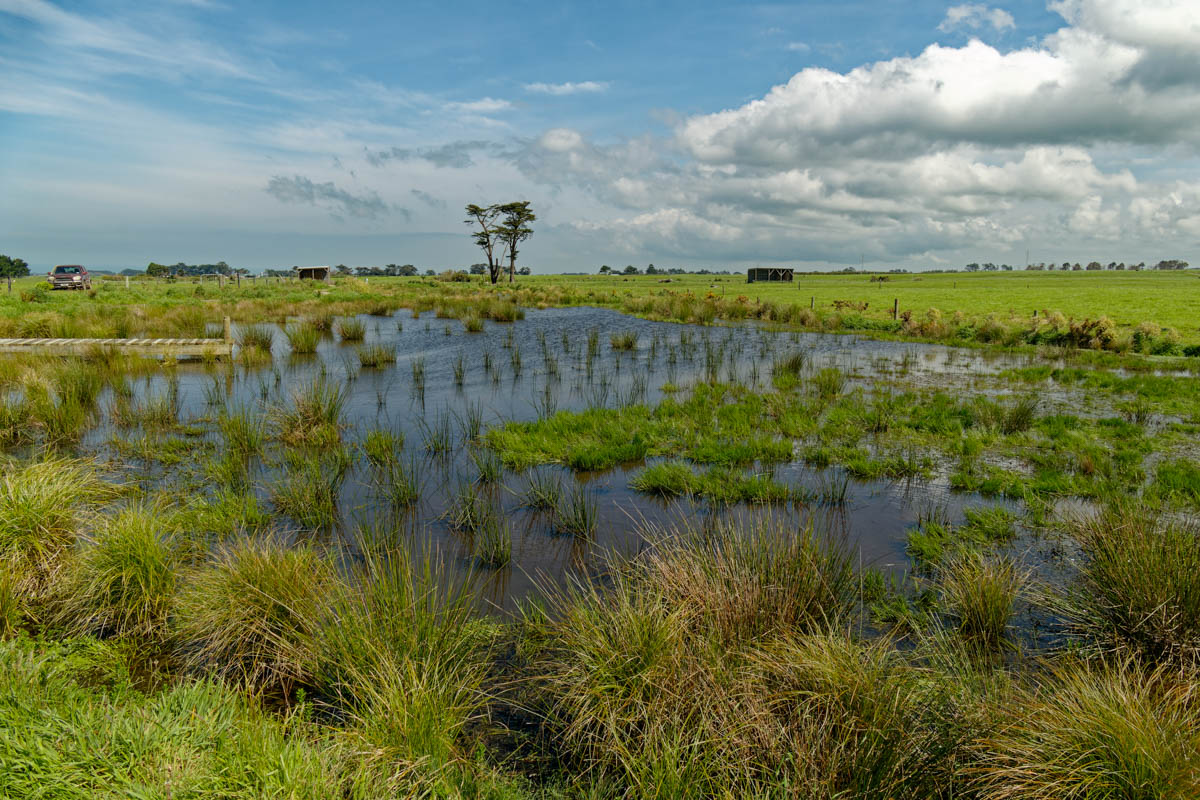
“Ideally, farmers would be able to stop producing beef on land that’s been adapted from a wetland, turn it back into its original state, and make a living from doing so. If a biodiversity market is functioning properly, it will pay the true cost of conservation,” Weaver says.
“This means the market would not just function to pay the cost of killing possums or do fencing, but also cover the opportunity cost of a farmer giving up revenue earned from beef and lamb, for example. Instead, they would generate revenue from selling biodiversity benefits.”
So far, though, the potential for new income has not seemed to grip farmers’ imagination and there’s reasonable reasons for that. At the moment it just seems far-fetched that a realistic grasp has been put on the necessary start-up funds and then the ongoing costs of managing a land-use change project. That’s before opportunity costs have been factored in. And, perhaps most importantly, farmers, like everyone else, have yet to see the investors show their faces.
Both Beef + Lamb NZ and DairyNZ made submissions on behalf of their farmer constituents to the Ministry for the Environment’s consultation on biodiversity credits.
B+LNZ said it supported the intent of a biodiversity credit system that could provide additional income and support to landowners, but was otherwise lukewarm. It said farmers are mixed in their views on the ways support should be provided and the role of government in this. Many farmers it surveyed were preoccupied with the National Policy Statement for Indigenous Biodiversity going too far with its definition of ‘significance’ and the implications attached to an SNA.
DairyNZ was more conclusive in supporting an incentive-based approach, saying: “a well-designed biodiversity credits scheme would be one useful mechanism to achieve better biodiversity outcomes on New Zealand dairy farms.”
Weaver agrees with some of the initial scepticism. “The costs are not inconsiderable, and that we can only really speculate on the extent of demand (willing buyers of credits). When you start to do the maths, the cost of getting a project started – the fencing, the planting, replanting natives etcetera – you are getting into the millions. Farmers don’t tend to have many millions of dollars down the back of the couch, so you are going to have to source the funds from somewhere. That is the nut that has yet to be cracked.”
Identifying the potential demand for biodiversity credits is the first of a swathe of obvious difficulties ahead for a government or any market administrator attempting to establish a scheme. Among others, it would need to set standardised units of biodiversity to invest in.
Muller doesn’t see this as impossible to overcome. She acknowledges it is easier to measure carbon (biodiversity’s environmental cousin). There is science about how a kilo of carbon is measured. But a biodiversity unit could be determined by activities, if not results (such as removing greenhouse gases from the atmosphere).
David Hall, climate policy director at environmental impact investor Toha, says there’s a range of schemes working to standards already operating in other countries. These include the agri-environment payment schemes that have emerged in Europe to improve onfarm biodiversity outcomes, especially following the 2023–27 reform of the EU’s Common Agricultural Policy.
“These schemes have tended to be action-based, where farmers are compensated for implementing certain actions. But a number of results-based agri-environment payment schemes are emerging, as well as hybrid schemes that combine action- and results-based payments,” Hall says.
“The results-based approaches are argued to be better for farmer motivation because they are less prescriptive, reduce the need for rules and regulations, and enable farmers to use localised knowledge to deliver results.”
Sean Weaver says there is a lot of work going on internationally on biodiversity standards. He’s involved in the United Nations-supported Biodiversity Credit Alliance (BCA) which exists to provide guidance for the establishment of a credible and scalable market. “In practice, you need a system that is flexible enough to accommodate different activity and project types but also robust enough to be trustworthy. You need to have validated methodologies that set a standard … we’re getting close. We have proof of concept.”
On generating demand, Weaver is not short of examples where it could be ready made in NZ. Local government could help create demand by forcing developers to buy biodiversity credits from local regional activity. This would create a way to mitigate some of the biodiversity loss associated with urban development. Likewise, the government could prioritise Significant Natural Areas – something Weaver acknowledges most farmers are terrified of for having their productive land shut down – for biodiversity credit projects and provide farmers with compensatory revenue as outlined above.
It’s worth re-emphasising that despite the government’s consultation and the publicly funded study into novel financing options for land use change, a biosecurity credits system is still ‘in discussion’.
Weaver says we are at the very early stages of market development, and voluntary demand is by and large untested. He acknowledges people on the supply side (including farmers) are showing concern as the debate starts to create some expectation, and that’s not helpful.
In terms of policy development, David Hall says that as we explore the role a biosecurity credits system could complement the carbon credits system (something that has been advocated for, and to an extent pitched as inevitable by some facilitators of plantation forestry), it’s important to note the tide is already turning on offsetting in a big way internationally. “For New Zealand it would be better that small-scale forests and wetlands are monetised for their biodiversity and/or adaptation value. Then the cash flow could help to compensate for a potential price being paid on agricultural emissions. Trying to compensate via offsetting will unravel eventually, because it straddles irreconcilable accounting regimes. At worst, it’ll end up producing a liability that falls on the taxpayer.”
The momentum that has emerged over the past year with both public and private investment in the discovery process does, however, have the possibility of stalling. There is no certainty the new Government will have the appetite to expedite further development of a biodiversity credit system. Even if the recommended pathway from the Ministry for the Environment’s consultation ends up being a ‘hands off’ role for the Government in the market development, Weaver says the Government would still need to help generate demand and overcome barriers to entry to make it work.
That said, none of this deters from our fundamental need to find a solution to mitigate further environmental loss.
Weaver is confident a biodiversity credit system will emerge. He expects value chains across the economy will start seeing the attraction of incorporating biodiversity enrichment and biodiversity credits will enable that. Purchased biodiversity units will be able to be embedded anywhere – housing development, financial products, as well as food-production chains that directly benefit from land that have biodiversity deficits.