Farmers’ wishes and politicians’ promises
Farmers’ underlying calls for the next incoming government are longer term strategies that are agreed and locked into the future, immune to changes in government and more autonomy to get on and run their businesses. Words Sarah Perriam-Lampp & Tony Leggett.

As New Zealand prepares for the 2026 election, the primary sector stands at a critical juncture, balancing international economic momentum against persistent domestic challenges. On the global stage, world-leading trade policy has delivered key victories, securing three new free-trade agreements with the United Kingdom, European Union and United Arab Emirates, and a fourth deal with India on the horizon. At home, farmgate returns have never lined up so well – dairy, meat and even strong wool – have shown strong recovery over the past three years, signaling renewed confidence despite the pressures on arable farming and rising working expenses.
However, underlying friction remains between regional farming communities and regulatory expectations. From the ongoing conversion of whole farms into forestry to the sidelined Gene Technology Bill, primary producers are three years on without updated frameworks to address climate demands from their markets.
With the 2026 General Election approaching in November, will political promises resolve the sector’s policy bottlenecks to continue to be the economic powerhouse the country needs?
This season’s Special Report is a practical blueprint for incoming policymakers to listen to farmers and industry groups’ election wishes to set the stage for a pivotal debate on what we actually want. And it may just be for the government to get out of the way.
“We need to sort ourselves out, grow up and mature. It’s time for a long-term strategic plan backed by independent science.” – Jon Pemberton, Southland
If curiosity killed the cat, uncertainty is the trap
As November’s General Election draws nearer, the big challenges facing farming for many farmers we interviewed are either already sorted or work is now underway. But it is the “flip-flopping” that keeps their business decisions in check.
Southland dairy farmer Jon Pemberton is hoping successive governments realise the counter-productive nature of the pendulum swings so farmers can invest with confidence to create a sustainable future for themselves and the country. He says farmers need to make decisions knowing it’s on an agreed, cross-party, long-term strategy.
“We need a cultural shift where we start taking in a very holistic view on how we do things,” he says. “That’s what’s missing with New Zealand politics.”
Jon admits the current government has been much more willing than the previous Labour-led government to engage with farmers on the social licence to farm. He’s concerned that any change of government later this year could quickly lead to a shifting of the rules and regulations.
Reflecting on his 2025 Nuffield Scholarship report, Jon says he saw lots of examples in other countries where efficient, profitable food production and good environmental outcomes can work hand in hand.
“To achieve this, we have to have independent science that allows the decisions to happen without being influenced by political pressure from one party or another.”
Travelling overseas during the fact-finding stages of his recent Nuffield report highlighted the benefits of seeing first-hand how governments direct and support farmers.
He returned thinking New Zealand as a country could do better in terms of productivity, but it will take strong political will to change.
“We need to sort ourselves out, grow up and mature,” says Jon. “It’s time for a long-term strategic plan backed by independent science.” He urges that until we agree on the science, farmers don’t have ownership of it and will hit road blocks with policy level decision making.
The rising influence of lobbyists and pressure groups is also being raised as a concern by farmers when they consider the priorities they want from an incoming government. Some argued the case for a register of lobbyists, showing who their clients were and their budgets.
Jon is aware of lobbyists using social media campaigns to target specific issues and gain traction more quickly than ever before.
“We’ve got lots of fringe groups influencing the thinking of politicians and it really worries me. I see so much conflict in New Zealand at present because we are a small pond with a handful of big fish.”
Jon’s 2025 Nuffield scholar counterpart is also calling for smarter, more streamlined compliance.
“They’re not going to fund things like new grass cultivars. It is changing from traditional agricultural research into ‘let’s be tech led.’” – Travis Glare, CEO, Lincoln Agritech
After years involved in wool innovation, behind and beyond the farm gate, while managing a diverse Wairarapa station with her husband Kurt, Lisa Portas is calling for maintaining robust standards that the government can support in order for farmers to succeed globally with their exports.
“Good regulation is important but it should also be practical and efficient,” she says.
She also wants support from the government to create value from appropriate environmental outcomes.
“We need to find credible ways for farmers to be recognised and rewarded for measurable environmental improvements, rather than these being viewed only as a cost.”
Lisa points out that Australia’s work around soil carbon is well ahead of ours and they have an advantage through creating mechanisms for verified environmental outcomes that are having economic value for their farmers.
She makes a strong case for the government to step up its support for the ‘New Zealand Inc’ brand values with our international customers and just as importantly, to build trust with New Zealanders.
“I think export competitiveness, market relevance and our social licence increasingly need to go hand in hand.”
No science, no strategy
Scientist Travis Glare would like to see an immediate overhaul of the current funding model for research in New Zealand by the incoming government.
As the CEO of Lincoln Agritech, an independent research company which works with local and international clients to deliver science-backed products, Travis says the existing funding system is “broken” and scientists spend far too much time chasing money resulting in less hours on the science that is needed to keep New Zealand competitive.
He wants to see a much more long-term strategy developed to provide more certainty for the sector.
Travis says the merging of some of the Crown Research Institutes in 2025 was inevitable, to save on duplicated administration and management costs. However, the government also reduced the funding of traditional agricultural science in favour of investment in developing commercially-ready technologies.
“They (the government) have said we’re going to defund what is basically bioeconomy agricultural research, but we will fund technology.
“So under the current model, they’re not going to fund things like new grass cultivars. It is changing from traditional agricultural research into ‘let’s be tech-led’.
“It’s very easy at a political level to say we’re going to fund impact or we’re going to fund science that makes a difference. But that ignores the fact that science is a continuum of ideas.
“The next Rocket Lab probably won’t come from someone saying I’m going to create Rocket Lab. It’s going to come from someone saying ‘I wonder what happens if you do this?’”
Travis believes the funding system needs more balance so the fundamental research that has underpinned New Zealand’s efficient farming systems continues to build the pipeline of products for the future.
Stability in the research system is his top priority for the incoming government. He wants any incoming government to stop chasing “shiny toys” and to recognise science as the country’s economic engine room.
“I know it’s hard to prioritise agricultural research when health and education are a mess. But we’re not going to be able to pay for health and education unless we’re actually at the leading edge of the world in research and technology for the primary sector.”
Another area of concern for Travis is the current regulatory environment which he believes is stifling innovation.
Government agencies are often under-resourced and suffer from a “revolving door” culture with staff who simply switch departments for promotions, rather than building their knowledge so they help create more effective government policies and regulations.
He’s also concerned about the loss of bright young minds and says he is concerned by how few New Zealanders are enticed into the work force rather than studying through to doctorate level.
Has this coalition moved fast enough for farmers?
Federated Farmers president, Colin Hurst, says a stronger farming sector benefits the entire country, not just rural communities.
“When farming does well, provincial New Zealand does well, local businesses do well, export earnings increase, and jobs are created.”
However, the pace of the wishes from the 2023 General Election may not be moving as fast as some would like.
The reform of the Resource Management Act (RMA) was always going to take time. The patience of farmers for a more streamlined, faster and less costly consenting process will grow thin in the next term, driving more of the uncertainty.
The Gene Technology Bill, promised to pass before the election, is sitting idle in spite of being included in the National Party’s coalition agreements with Act and New Zealand First. It proposes reforming 30-year-old legislation restricting the use of gene editing technologies for use outside of confined laboratory conditions, but the can has been kicked down the road until after the election.
Even with farmgate returns having recovered substantially from three years ago, rising farm working expenses are still an irritation.
Add on top the promise to halt the creep of forestry across New Zealand hill country farms, currently at a rate of 30,000 hectares of whole sheep and beef farm conversions since mid-2025 – confirmed in the August Orme & Associates report.
Farmers will be looking closely at policy rather than promises this election.

Federated Farmers
Federated Farmers arrives at the 2026 election in a markedly different mood from 2023.
Where that year’s priorities were written against a backdrop of record-low confidence, high costs and unworkable regulation, former president Wayne Langford’s foreword in Backing Kiwi Farmers opens on rural communities “Feeling a lot more positive about the future”.
The tone has shifted from grievance to ambition and the headline ask is a big one: double farm productivity. It draws a line between farm profitability directly and the supermarket shelf, arguing New Zealand food is expensive not because of land, climate or growing conditions, but because producers are tied up in “poor regulation and endless red tape”.
TOP 5 ASKS
- Deliver 10 nationally permitted activity standards in the first year – covering farm plans, vegetable growing, on-farm water storage, effluent, fertiliser, wetland restoration and small-to-medium solar and make farm plans the primary compliance tool in place of resource consents.
- Commit to no new taxes on farming – ruling out methane, water, wealth, land and capital gains taxes, and stop artificially incentivising whole-farm conversions to permanent carbon forestry.
- Seed-fund and fast-track new water storage projects – change the code to let farmers sell surplus solar via multiple trading relationships and peer-to-peer trading.
- Spend 100% of the $240 million International Visitor Levy – on conservation and tourism, permanently double QEII Trust baseline funding from $4.3m to $8.6m, and return 500,000ha of DOC land to grazing leases.
- Establish a single layer of local government – separating provincial areas from major cities, remove councils’ ability to require cultural impact assessments and end joint decision-making with unelected groups.
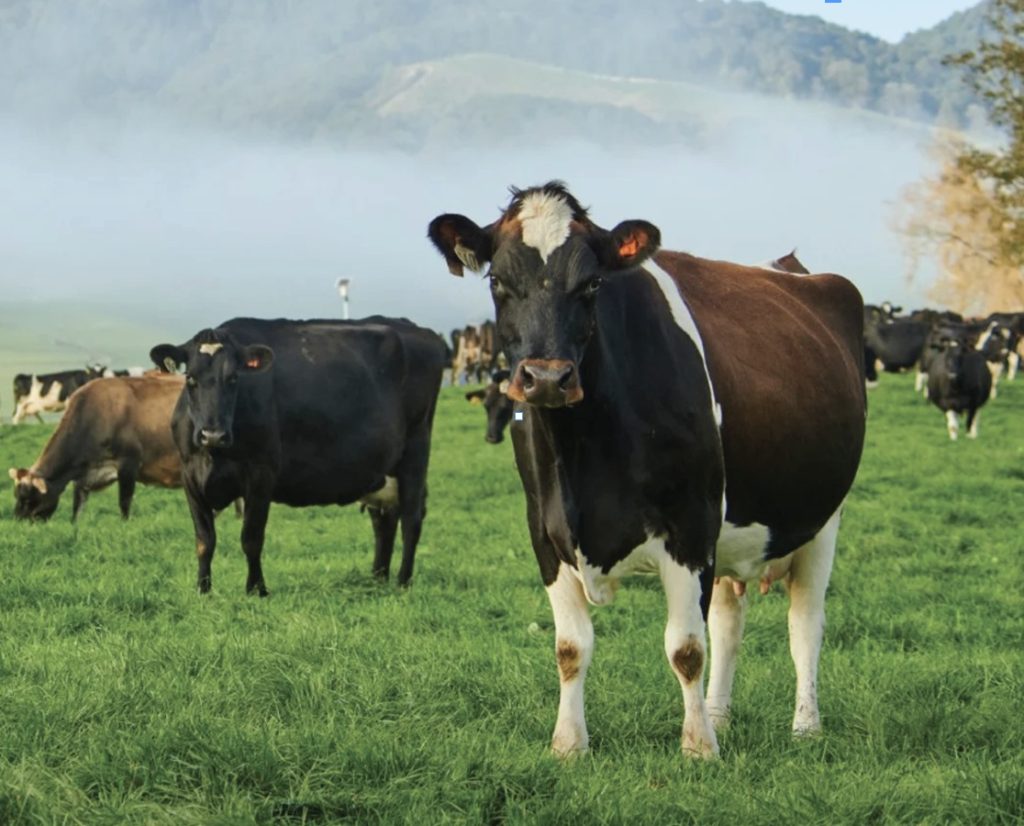
DairyNZ
DairyNZ arrives at the 2026 election with $28.6 billion in exports, a quarter of everything New Zealand sells offshore. The New Zealand dairy sector equates to 51,800 jobs.
Their 2026 election priorities point out that 97 percent of farmers now hold a farm environment plan and they have already spent the money on effluent systems, planting, genetics, welfare, resilience and what they need now is policy settings that stay in place to allow that investment time to pay off.
They state that every reset of freshwater or climate rules resets the payback period on farm capital too. On climate, they ask us to retain existing targets and accelerate the tools not to reopen the settings – a goalpost with solid footing.
TOP 5 ASKS
- Stop resetting the rules – Durable resource management reform and freshwater national direction that is workable, science-based and built with sector input – plus backing for farm plans and catchment-led approaches.
- Fund biosecurity readiness permanently – Complete the Biosecurity Act reform and commit enduring money for foot-and-mouth preparedness, with clear decision rights and a fair government/industry funding split.
- Hold methane targets, speed up the tools – Stable science-based targets, faster approval and uptake of proven emissions technology and fewer barriers to on-farm solar, battery storage and grid connection.
- Keep migration workable while building the domestic pipeline – Timely access to skilled workers with viable residency pathways, alongside agriculture in the school curriculum at every year level.
- Back applied science and finish gene tech reform – More funding for applied dairy research, completion of the gene technology reform process and an end to duplicated freshwater, emissions, soil and biodiversity reporting.
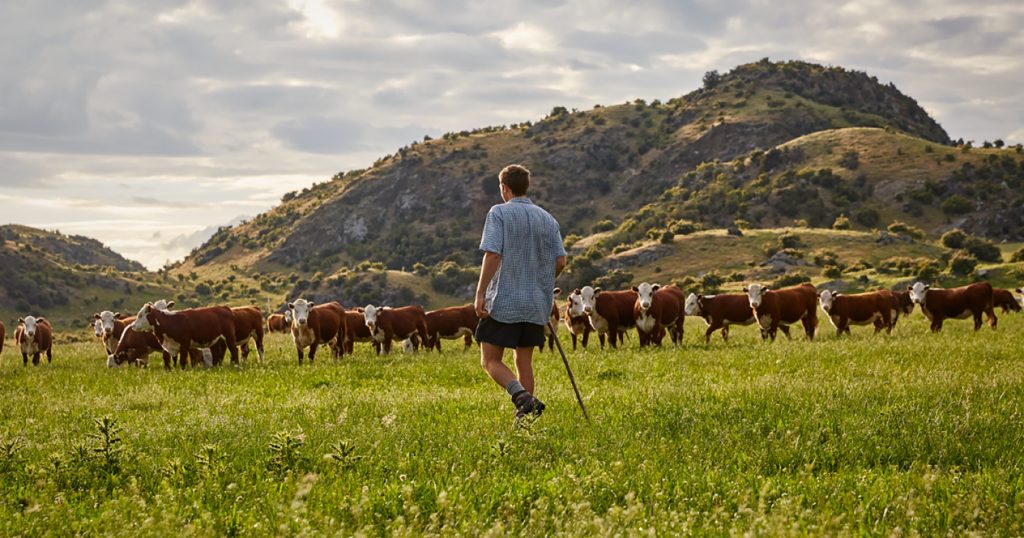
Beef + Lamb New Zealand
New Zealand’s red meat sector arrives at the 2026 election with a joint manifesto from Beef + Lamb New Zealand and the Meat Industry Association and a single organising demand: predictability.
This sheep and beef industry contributes $12.6 billion in export revenue to 31 December 2025, $15.4 billion contributed to GDP and 121,000 jobs (5% percent of national employment). The sector says it’s on target to reach $24 billion in export revenue by 2035 and asks the government to control what it can control.
Trade access, freshwater rules, an RMA reset, and an end to sheep and beef country disappearing under carbon pines are among their priorities for the next incoming government.
TOP 5 ASKS
- Get the India FTA through Parliament – It removes the 30 percent sheepmeat tariff, creates a legal framework for non-tariff barriers and levels the field with Australia.
- Stop the conversion of sheep and beef farmland into carbon farms – Restrict whole-farm conversions on land classes 7 and 8, tighten limits on carbon-only forestry in the ETS and review offshore purchase of farmland for forestry.
- Remove the suspended fine sediment and 95th percentile E. coli limits under the Freshwater NPS 2020 – replace them with outcomes-based, achievable limits set with catchment variation in mind.
- No pricing of agricultural emissions – Hold the warming-based biogenic methane target (14-24 percent by 2050 off 2017 levels), take a split-gas approach internationally, and stay in the Paris Agreement.
- Fix workforce and make Immigration settings flexible – enough to fill seasonal roles, faster visa processing, work-based learning eligible for student loans and fuel, fertiliser and energy policy that recognises the sector cannot simply reduce demand.
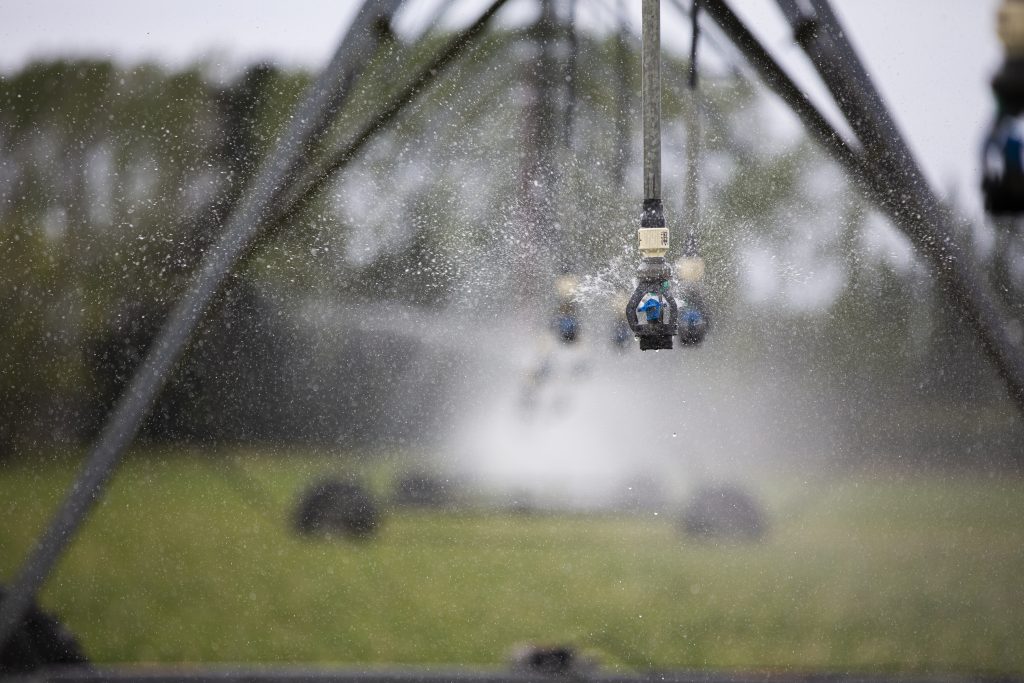
IrrigationNZ
IrrigationNZ is pounding the pavements with the same repeated message this election – New Zealand doesn’t have a water shortage, it has a water distribution problem. The country receives around 440 billion cubic metres of freshwater a year, enough to fill Christchurch’s new Te Kaha Stadium 427,000 times and we allocate roughly four percent of it.
Their 2026 election manifesto highlights that rain falls in the wrong places at the wrong times, that climate change is widening that mismatch, and that the national response has been project-by-project rather than planned. Its remedy, they say, is institutional rather than technical. They want a Minister for Water, a national water strategy and a dedicated infrastructure entity modelled on Tasmanian Irrigation. Storage, it argues, should sit alongside roads and transmission lines as nationally significant infrastructure.
TOP 5 ASKS
- Appoint a Minister for Water – a single portfolio coordinating water across food production, infrastructure, climate adaptation, energy and communities, backed by a long-term National Water Strategy that sets direction across environmental, economic and community outcomes.
- Establish a national water infrastructure entity – identify, prioritise and deliver a pipeline of storage and distribution projects, working with regions, iwi, communities and investors explicitly modelled on Tasmanian Irrigation’s engineering and delivery expertise.
- Recognise storage and distribution as nationally significant, long-lived infrastructure – on par with transport, hydro-energy and communications and scale up capture, storage and distribution investment through coordinated public and private funding.
- Reform resource management – food production and the primary sector are core goals of the system, policy settings reflect water variability rather than scarcity and staged intervention pathways prioritise voluntary improvement before regulatory response.
- Build the workforce through industry – Vocational curriculum and training across freshwater management and irrigation, from entry-level qualifications and workplace-based training through to higher-level technical and professional pathways.

Rural Women New Zealand
Celebrating 100 years in 2026, Rural Women New Zealand (RWNZ) has laid out five pillars for 2026-29, and it’s less a wishlist than a warning.
RWNZ services are thinning, roads are deteriorating and the volunteers holding rural emergency response together are doing it without formal recognition or adequate funding.
Threaded through all five asks, is a single demand – that rural communities be brought into decisions rather than told about them afterwards.
TOP 5 ASKS
- Reverse the Equal Pay Act changes – RWNZ wants the 33 discontinued claims reinstated, the female-dominance threshold lowered and small rural employers supported to take part in the pay equity process – framed as a workforce shortage issue, not just a fairness one.
- Make telcos serve rural people first – Nationwide high-speed, reliable and affordable internet with rural and remote areas treated “as a priority, not an afterthought,” plus mobile coverage extended to eliminate blackspots that create safety risks.
- Fund the volunteers and fix the roads – Formal recognition and adequate funding for rural volunteer emergency services and rural road safety – maintenance, safety infrastructure, driver education – elevated to a national priority.
- Maternity care regardless of location – Rural communities and health services are empowered to deliver safe maternity care wherever people live, backed by incentives for recruiting and retaining rural health workers and more mobile and locally delivered services.
- A rural education strategy and buses that turn up – Stable, sustainable school bus networks, a skilled multi-disciplinary rural education workforce and a strategy giving rural communities a genuine voice in education policy rather than a consultation box.
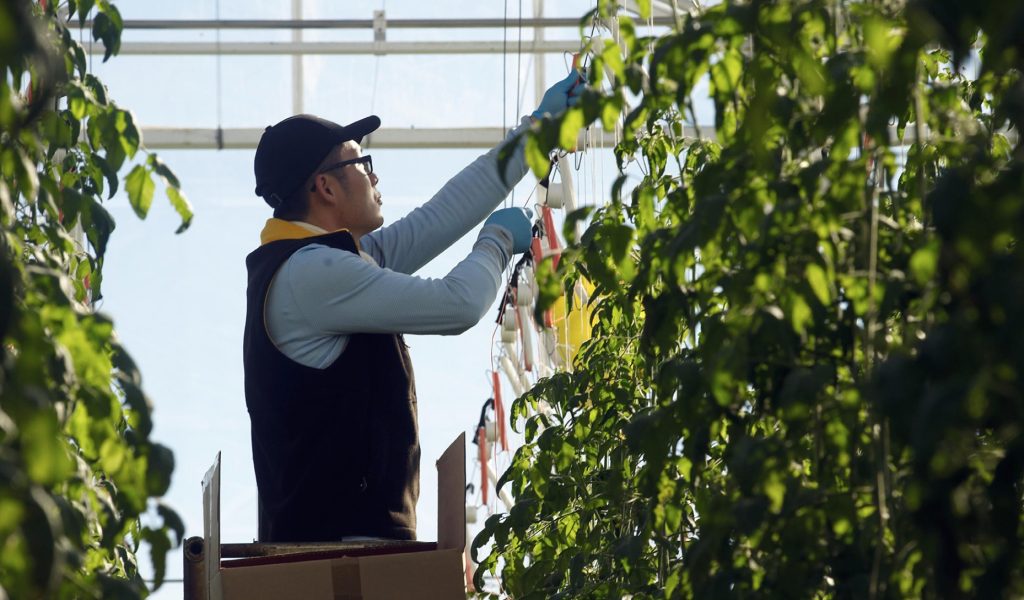
HortNZ
Horticulture punches well above its land area with $7.54 billion in export value from less than 0.1 percent of New Zealand’s soil. MPI’s latest SOPI forecast has horticulture export revenue rising five per cent to $9.2 billion in the year to 30 June 2026 – the sector is arriving at the election with momentum. HortNZ frames this election around food security rather than farmgate returns: the argument that regulatory settings now determine whether New Zealanders can buy affordable fresh produce at all. The Aotearoa Horticulture Action Plan targets doubling farmgate value by 2035, plus a request that the sector retains a dedicated minister to drive it.
TOP 5 ASKS
- Grocery market reform – Extend the Grocery Supply Code beyond supermarkets to wholesalers and fresh-produce buyers and require margin reporting to the Grocery Commissioner, as banking does.
- Biosecurity and crop protection – More investment at the border and in early detection, faster approval pathways for new crop protection tools and international harmonisation to streamline registrations.
- Cutting duplication – A consistent national approach to land-use, freshwater and climate planning that names food production a national priority, plus national direction for commercial vegetable production that allows crop rotation.
- Water and energy – Community-scale storage enabled through simplified rules, a food production objective in national freshwater direction and a workable transition off natural gas for greenhouse growers.
- Workforce – Conclude the RSE review in 2026 to give growers, workers and Pacific partners certainty, and recognise skilled horticulture roles in immigration pathways.
Future Farmers NZ
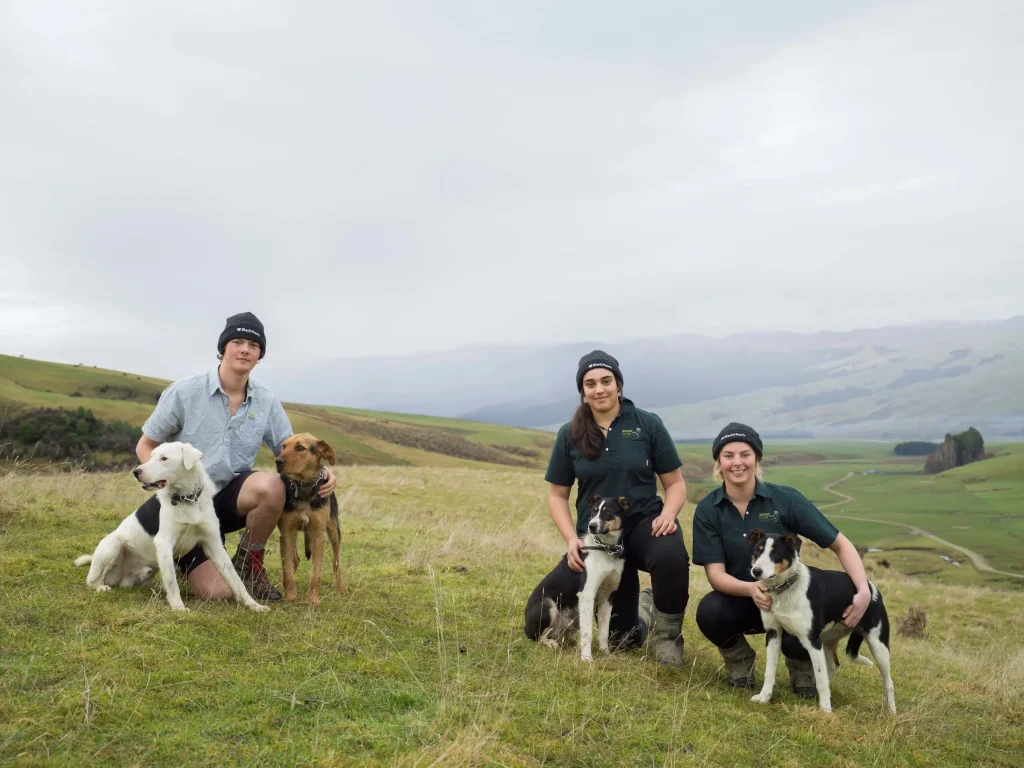
The youth voice in the food and fibre debate arrives with the longest time horizon of any group in this feature and the only manifesto that sets emissions targets for the year 2200.
Future Farmers frames the sector as a solution rather than a problem, arguing New Zealand’s competitive edge lies in stewardship, not volume. Seven themes – land use, forestry and carbon, education, farm management, hauora, supply chain and markets – hang off a single premise: that the current system has externalised its costs and the bill is now visible in soil, water and suicide statistics.
Their manifesto is notably comfortable with land use change, including a “brave conversation on our national stocking rates.” It is equally comfortable sitting on the fence on gene editing, declining to take a position but asking only that youth voices be in the room on that issue
TOP 5 ASKS
- Price emissions via a producer levy – cutting gross methane 20% by 2030 and 50% by 2050 off a 2021 baseline with emissions and sequestration split as separate liability and income lines on farm accounts.
- Native forestry over exotic – Native credits traded at a premium on the ETS; no exotic carbon forests in perpetuity, a harvest plan required after 40 years.
- A nitrate bottom line of 1mg/L and a 190kg N/ha cap – administered at catchment rather than national level, with every farm in a catchment group.
- Protect or restore 30% of every ecosystem – backed by an MPI-led national biodiversity strategy for farmland and a Farm Environment Plan on every property over 20ha.
- One compliance dashboard with an API – enter it once, co-designed and fed through all with government, iwi, industry and software providers.