DIY pasture renewal
Deferred grazing to rejuvenate pastures has been a no-cost alternative to a summer regrassing programme for Waikato farmer Bill Garland, and he believes the practice could help farmers in their quest to become better environmental managers, as well being light on the pocket. Words Rebecca Greaves Photos Christine Cornege.

Listen to the podcast:
Bill Garland tried deferred grazing almost by accident after a paddock intended for silage came away in mostly weeds and he decided it wasn’t worth harvesting – now he’s sold on the practice that costs him nothing, all he needs to do is shut the gate.
Deferred grazing is the practice of locking up or dropping paddocks out of your rotation in late spring to early summer, giving plants the chance to re-seed and replenish energy stocks, before opening them back up in January to early March.
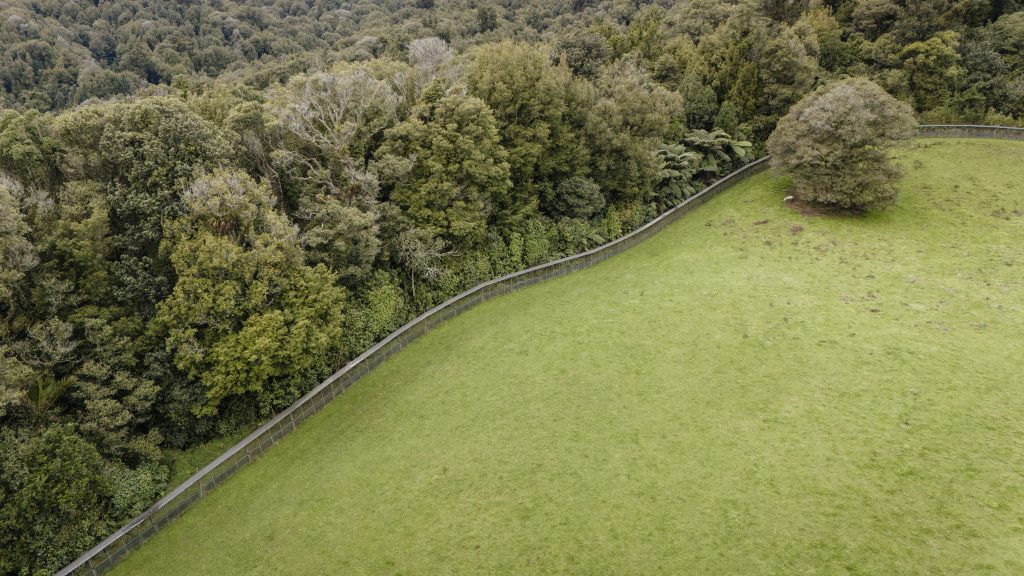
Bill and wife Sue have been farming south of Cambridge for more than 50 years, on the western side of the majestic maunga (mountain) sanctuary, Maungatautari, home to one of the world’s longest pest-proof fences (the Garlands have 8km of boundary with the fence). Little wonder the farm has been earmarked by the local council as sitting within an outstanding landscape area.
It is just one of the reasons the Garlands are cognisant of every decision they make, and the impact they have on the natural environment. The outstanding landscape classification means a consent would be needed to plant pine trees (if you wanted to, which the Garlands don’t), as they would not be considered in keeping with the landscape-values of the property.
The couple farm 430 hectares (370ha effective). There is 20ha of long-term production forestry (about five varieties of exotic species) including 2ha of natives, which won’t be harvested for 120 to 250 years. The balance is in native or retired areas of regenerating bush.
“We won’t be seeing any returns from that, but it’s land that should never have been cleared in the first place … there’s a fair bit of damage when you start harvesting pines. We want the least amount of damage, so we chose exotics that are long-term and blend in with the native bush,” Bill says.
“If we were running a pine regime, we would be harvesting every 25-30 years and looking at a bomb site after. I wasn’t keen to impose that on any future generations.”
They run sheep and cattle at a ratio of 55% sheep to 45% cattle in an all-grass system. They have 1700 breeding ewes, put to the ram, as well as 480 hoggets, all mated at a weight of over 45kg. Last season they docked 3300 – so the lambing percentage is high. “Our sheep are big. We’re all Composite now,” Bill says.
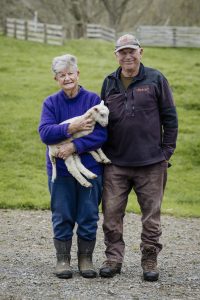
The main part of their business is supplying lamb to the Whole Foods Market in America through Te Kuiti Meats and they finish lambs to an average of 20 kilograms carcase weight (lambs must hit 18kgCW or more to meet the supply specs). With the exception of the pets, which they give to children for pet day, all lambsgo through this programme. In the middle of lambing at the time of the interview, Bill jokes that after 50 plus years Sue is getting a bit sick of feeding pet lambs, though.
On the cattle side, they finish about 100 beef steers and 100-150 Friesian bulls, which are bought in from local dairy farmers as calves. They aim to kill all cattle before they reach two-years-old. “No question, the bulls are the most profitable, but least desirable animals,” he says with a laugh. “We have been farming them forever and you can’t beat the returns on them.”
Contour-wise, the vast majority
of the farm is Class 6, but Bill describes it as good productive, high performing land, which is generally summer safe. “Historically, the land had a high population of Māori who grew vegetables here, so it must have
been productive.”
LOCK AND LEAVE
Bill stumbled across deferred grazing by accident several years ago, though he says it’s not a new concept, he remembers a local farmer singing its praises 40 years ago.
Attending a Beef + Lamb New Zealand field day when AgResearch’s Dr Katherine Tozer was presenting on the practice, Bill got to thinking about a silage paddock he had shut up. “This one particular paddock had come away in mainly weeds and when I came to harvest, I questioned if it was the right thing to do. I called Katherine to get some advice about grazing off a deferred paddock and how I should manage it.”
It was only a small paddock, but it fit within the timeframes Dr Tozer was proposing for deferred grazing, so they decided to graze it off in February, instead of making silage. He was amazed by the ryegrass and clover that came away. Up until that point, for the previous 25 years or so, the Garlands had been running a summer crop regrassing programme, so Bill was
well aware of how to manage young grasses and the time needed to get them into production.
Deferred grazing has caused Bill to re-evaluate his relationship with new grasses. “There’s real benefit in allowing pasture to re-seed from time to time. We’ve become so addicted to new grasses, nitrogen and high-utilisation that we’ve forgotten how to maintain pastures for the long term.”
“It was so vigourous, it was just unbelievable. When we came to set stock for lambing, we ended up running 30% more sheep in that paddock than we did in the adjoining paddock.” – Bill Garland, Waikato farmer
The nitrogen buildup in the paddock that had been deferred meant the pasture was much denser than what they traditionally got from their regrassing programme. “And it was so vigourous, it was just unbelievable. When we came to set stock for lambing, we ended up running 30% more sheep in that paddock than we did in the adjoining paddock.
“A lot of the new grass we were growing in spring was actually because of the nitrogen we were putting on. Whereas now, we are only putting on 20% of the nitrogen we would normally.”
Bill says the regrassing programme wasn’t delivering exceptional results when compared to the deferred paddock. An added benefit was the deferred pasture was so dense it choked out the weeds, which meant they did not have to spray weeds, another cost reduced. “Now, one year down the track, it looks a million bucks and the big thing – there was no cost. It’s a no brainer.”
He also noticed when digging into the soil, after taking stock off and building up a litter base, that deferred grazing had improved the viability of the soil. There was no pan, it was friable and there seemed to be more earthworms.
Last summer/autumn they identified two new paddocks for the deferred grazing treatment. The first had been badly pugged and Bill wanted to see if deferred grazing would help the pugging. The other paddock had been sown in new grass seven years earlier, but there was no clover left and it wasn’t performing. Soil and herbage tests revealed nothing and Dr Tozer asked
if she could over-sow Plantain and Lotus Major (a legume) in that paddock. Bill says the results in both paddocks were spectacular.
He cautions that clover often takes off in deferred paddocks, and there can be a temptation to put lambs in. “Instead, we deck the paddock with a large mob of ewes, quickly – they trample a fair chunk of it. The young grass just sprouts through that. The period between grazing and germination is quite short.”
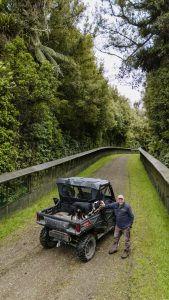
Aside from the fact that deferred grazing works, Bill believes it could help farmers grappling with expectations to reduce our impact on the environment. “We are all having to review our farming practices and contend with climate, changing weather patterns and rising input costs … we have to think about re-setting our businesses and this practice fits with environmental planning and sustainability.”
Bill reflects back on major periods of change in the sector, like the 80s, when lambing was about 100% and you might kill a 12kg lamb. There was no silver bullet then, it was a combination of things that shifted the dial for farmers.
“Of course, wool was good, and it was profitable to farm empty hoggets as you got a good clip of wool. There were lots of things we did to move the emphasis to sheepmeat. Now, we’re producing 50% more sheepmeat per hectare and running a whole lot less sheep. The same thing happened when subsidies were removed, we had to become better financial managers. Now, it’s the pressure to become better environmental managers.”
Bill says we need tools to help farms become more environmentally sustainable, and deferred grazing is one of them. “The beauty of deferred grazing is it doesn’t matter how steep the slope is, it’s got a lot of applications that regrassing through traditional methods doesn’t have.
“We were agonising over how we would regrass some paddocks that had run out after seven to 10 years, and this seems to be the solution. The regime of deferring paddocks is similar to the regrassing programme, about 12ha this year will be locked up.”
The benefits for the rest of the farm in pulling paddocks out after weaning lambs is the same as shutting them up for silage at a time when you have excess growth, he says. It’s an effective way to maintain feed quality over the rest of your farm.
Bill says there is nothing to lose trying deferred grazing, apart from a slightly reduced grazing area over summer. The key to success is getting the timing right, and treating it like you would young grass.
THE RESEARCH
An AgResearch study has explored the potential for farmers to incorporate deferred grazing into their systems. Bill Garland’s farm is one that has been included in the study.
AgResearch senior scientist, pasture science, Dr Katherine Tozer is excited about the opportunities deferred grazing offers farmers and encourages farmers to give it a go and see the results for themselves.
Dr Tozer says deferred grazing is a pasture renewal tool, one that is cheap and low risk, but delivers to the bottom line.
“For grasses, it’s the simple sugars used to make the plant grow, and complex sugars used to store energy. Think of the leaves like solar panels, capturing sunlight and turning it into energy – we want them to capture as much sun as possible during that rest phase, converting it into energy for growth after that rest period.”
She says the reason farmers are using deferred grazing is to maintain their plants, increasing the tiller population, with the aim of controlling pasture quality and feed supply at a farm system level.
For farmers who defer the late spring surplus and carry it forward to another time of the year, this can also mean valuable feed is available in summer or times of drought. This gives farmers a buffer and can reduce stress in tough times.
“You need to be able to graze it off hard at the end to open it up, which is critical. Focus on one paddock and get it right. Be mindful that you need to manage that paddock back into the rotation.” – Dr Katherine Tozer, AgResearch
Dropping paddocks out of the rotation and locking them up has benefits for the rest of the farm, optimising grazing pressure on the remaining paddocks. Areas that are not deferred don’t ‘get away’ and pastures can be maintained at a higher quality – shorter, leafier and greener. Dr Tozer says the concept is about matching feed supply and demand.
“We find for sheep and beef farmers, it’s the rest of the farm that’s driving the profit,” she says.
FARMAX modelling estimated that, on a summer dry sheep and beef hill country farm northwest of Hamilton, deferred grazing on 15% of the farm increased total farm and per hectare gross margins by 8%. Dr Tozer recommends farmers identify paddocks that could be candidates for pasture rejuvenation in advance. The water, fertiliser and subdivision boxes should be ticked first, before considering whether to lock a paddock up.
“Look at the desirable pasture species. Spring is when most species grow at their best – do they form 60-70% of what’s there? Desirable species drive your performance.
“If they are low in spring, they won’t get better at other times of the year. What’s your starting population? You need something worthwhile there in the first place.”
When shutting paddocks up, farmers need to consider how they will manage bringing that paddock back into the rotation after the deferred period. You need to be able to graze it hard and bring it under control.
Dr Tozer says while deferred grazing has ‘regenerative’ principles, it fits with standard conventional management practices. “We’re not talking about maintaining high residuals throughout the year with longer rotations, this is focused on the plant life cycle and could fit into a regenerative or conventional framework.”
She encourages farmers to dip a toe in and start small with one paddock. “You need to be able to graze it off hard at the end to open it up, which is critical. Focus on one paddock and get it right. Be mindful that you need to manage that paddock back into the rotation.
“It’s a cheap tool, it’s not going to cost, and if it doesn’t work, you can always open the gate. Give it a go … it’s never a single solution, but this is another tool in the toolbox.”
When grazing off and opening up deferred paddocks, 50% of the plants may be trampled and that’s not a bad thing. “Low utilisation is fine. Don’t think of it as wasted pasture, because the following autumn, winter and spring, you’ll get a heck of a lot more regrowth and tillers. You are not behind, that material breaks down pretty fast and actually has a protective effect for seedlings coming through, as well as protecting from temperature extremes and preventing soil from drying out.”
Farmers don’t need to be worried about Facial Eczema (FE) spore counts, as the research over four sites has shown the FE counts are consistently lower in the deferred paddocks. “The caveat is
still be careful, the count might be lower, but in a bad year it could still be over the threshold. All the evidence we have is that FE counts are lower in those paddocks, though.”
Under the deferred grazing banner, AgResearch has undertaken two studies over three to four years with funding from the Ministry for Primary Industries, Ballance Agri-Nutrients, T R Ellett Agricultural Research Trust, Bay of Plenty Regional Council, Greater Wellington Regional Council, Waikato Regional Council, Our Land and Water National Science Challenge and Beef + Lamb NZ.
It recently received further funding from MPI’s Sustainable Food and Fibre Futures Fund to investigate whether repeated application of deferred grazing over successive summers will result in larger and deeper root systems, increase water and nutrient use efficiency and overall pasture resilience in extreme climatic events.
“More work is needed, but the evidence we have with deferred grazing is that we can get more roots, at depth,” Dr Tozer says.
WHAT IS DEFERRED GRAZING?
Deferred grazing is the practice of locking up paddocks in late spring through to the start of summer to allow desirable pasture species to drop seed, before opening paddocks back up for grazing at the end of January through to early March.
Essentially, this acts as a re-seeding event for pasture renewal. As well as re-seeding with a decent pasture base, the practice allows plants to build up their energy reserves at a critical time in the plant life cycle and roots to grow down.
Renewal benefits are re-seeding and energy replenishment. Benefits at the farm system level are better pasture quality and increased feed supply.