Change-Makers
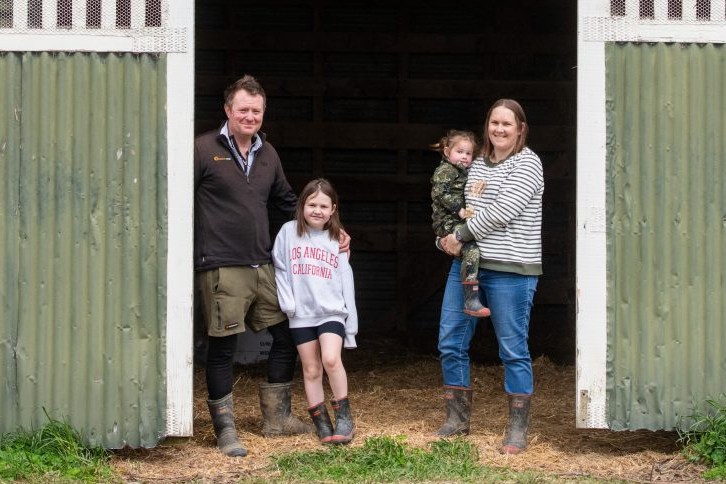
Since returning home to his family’s farming operation on Banks Peninsula eight years ago, George Masefield along with his wife Emma, have made some significant changes. The couple, with the support of George’s parents John and Carol, bought a tractor and have not looked back. Sandra Taylor talks to them about the development programme which has transformed their business and enabled them to finish all of their lambs on their dryland hill country and buy in trading stock.
Photos Kelly Shakespeare

Listen to the podcast:
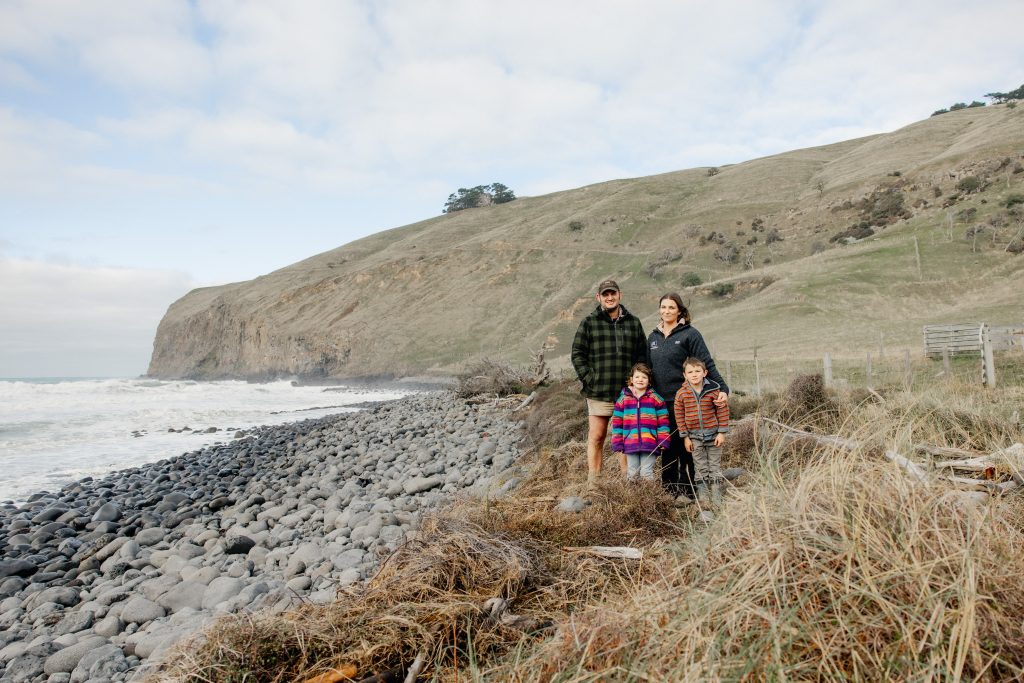
Since returning to the family farming operation on Banks Peninsula eight years ago, George and Emma Masefield have certainly made their presence felt.
With the support of George’s parents John and Carol, they have transformed their traditional hill country sheep and beef breeding and forward store operation to a high performance, intensive breeding and finishing business, which includes trading lambs.
While this sort of step-change is usually the result of an irrigation development, the Masefields have instead focused on a development programme that has resulted in a significant lift in the quality and quantity of drymatter they grow on their limited areas of cultivatable land
The family farm is a total of 1240 hectares, spread across three properties. This includes 430ha at Goughs Bay, which is where George and Emma are based, 480ha near Duvachelle, which is home to John and Carol, and a 330ha lease block at Chorlton, near Little Akaloa.
While all three farms are separate, they are run as one business and there are minimal stock movements between the three.
Adding value to the lamb crop
The operation runs a total of 4200 mixed-age ewes, of which 3000 are RomTex. The balance are straight Romneys and these are run at the Chorlton lease farm. Here, the Romney ewes are put to a Texel ram and all the ewe lambs are sold off straight off the ewes at weaning to a repeat buyer. George says the price is based on the store schedule plus a small premium. Replacement Romney ewes for the Chorlton block are bought at annual ewe fairs.
These are the only lambs sold as store in the business, all other lambs are finished on red clover and improved pastures.
At Duvachelle, all the RomTex ewes are put to a Texel terminal sire, while the ewes at Goughs Bay are used for breeding replacements and go to a RomTex ram.
George says the family had traditionally run Romneys but added Texel genetics to the mix 10 years ago to improve carcase weights and yields.
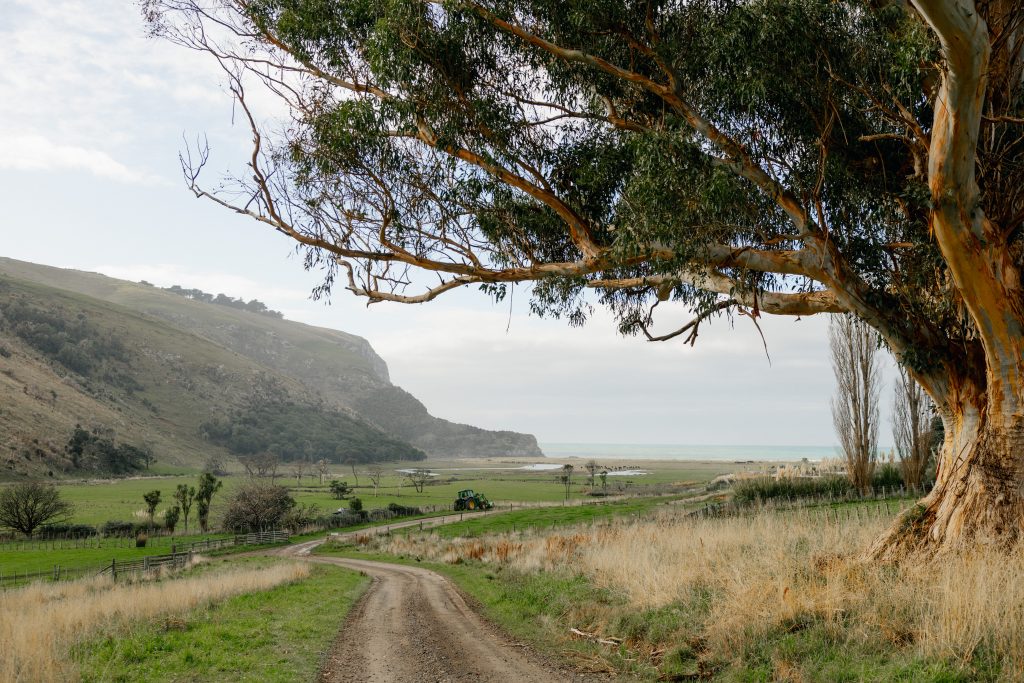
One of the strengths of the Masefield’s business is the way the three different properties complement each other. While only seven kilometres separate Goughs Bay from Duvachelle, there is a distinct difference in rainfall and aspect.
The east facing Goughs Bay captures more rain, with annual rainfall averaging around 1000mm with a range of 700-1200mm. This is about 200mm more than the Duvachelle farm. It also rains
at different times of the year, with Goughs Bay holding on to moisture longer in summer.
George says Goughs Bay benefits from naturally fertile soils, and a frost-free climate, which allows them to grow grass for much of the year.
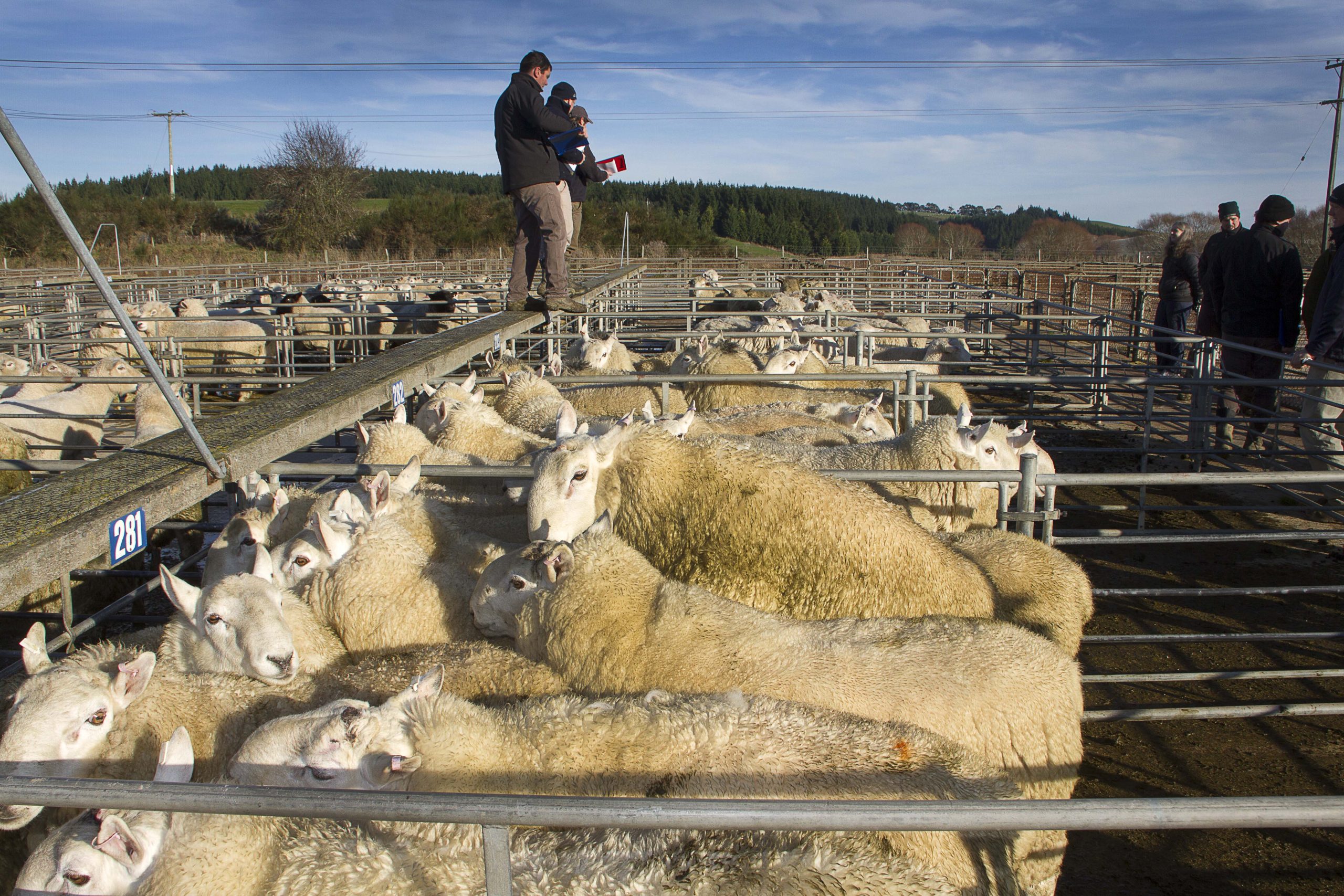
Isolation can be both a blessing and a curse, especially in relation to distance from market, but the family, who are Alliance suppliers, make it work.
Plunging into development
Over the past eight years, George and Emma have developed 140ha and George believes there is potential to develop another 100ha. The catalyst for this development was a leg injury that had George hospitalised for a period of time. About to return to the family farm, he lay there and thought about what they could do differently. “We had been doing the same thing and getting the same results and I was thinking about what we could do to change that.”
He drew on what he had learned and observed while working on a range of farming operations throughout the country as a shepherd and a stock manager and then running a crutching business; he suggested to his father that they buy a tractor.
His father supported the idea and George cultivated his first 10ha at Duvachelle, which was where he and Emma were then based. This 10ha was sown down in oats which were used for wintering dairy heifers. It was a proof of concept and it worked. The family then extended their development programme to include Goughs Bay.
All blocks ear-marked for development are sprayed, disced, maxi-tilled and drilled and the Masefields do every part of it themselves with gear they have bought over the years.
Alongside this development is a sub-division programme, cutting the blocks down to 5ha paddocks with water troughs fed from a gravity-fed reticulated water system.
“We had been doing the same thing and getting the same results and I was thinking about what we could do to change that.”
The paddocks go through two years of brassica crops, which includes kale, fodder beet, Raphno and Hunter. The latter two are used for lamb finishing and in autumn, they are undersown with grass and used as a winter forage crop.
After the brassica crops, which are used for wintering ewes and calves, the paddocks either go into a three-year grass or Relish red clover, a crop they describe as being the engine room of their business. After wintering on crop, the ewes are set-stocked on native or developed pastures for lambing in September and, as soon as possible after lambing, the ewes and lambs are shed onto new grass or clover blocks.
To prevent the animal health issues associated with high-octane forages, such as clostridial disease, all lambs are given a five-in-one vaccination at tailing.
The family starts drafting the terminal sire lambs at Duvachelle in November as they aim to get rid of as many cull ewes as early as possible.
At Goughs Bay, they start weaning on the first Sunday of December and repeat the exercise for two subsequent Sundays. The family has traditionally killed on Mondays; hence Sundays are never a day of rest in their business, particularly over summer.
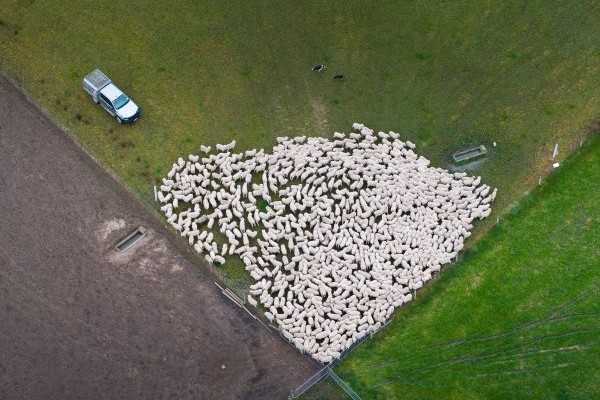
Around 800 lambs are sold prime at weaning, the remainder are drafted into weight categories, and run back onto clover or new grasses until they are finished. George and Emma say they are achieving post-weaning growth rates of up to 300gms/day on the clover, but they are not gunning for big carcase weights, aiming for around 17kg.
“We’ve worked out that it takes too long to get that extra 2kg. We’re better off flicking them and replacing them with trading stock,” says George.
The family sources the majority of their trading lambs from off the Peninsula but will buy them from much further afield if the price is right. One year they finished a total of 10,000 lambs and both Emma and George admit that that was just too many, particularly with labour being so
difficult to find.
Over summer, they spend much of their weekends weighing, crutching and loading lambs so they are at the works for processing on Mondays. “We’ve got to make money while the sun shines,” says George.
The couple aim to have the clover paddocks de-stocked by April and while ideally, they want all lambs sold before winter, they will carry just a few through. “There is a just a minimal number of lambs, we’re down to capital stock over winter.”
The family’s 800 replacement hoggets are sent to off-farm grazing at Dunsandel on the Canterbury Plains every year. They are sent off in mid-March and are mated, shorn and wintered, returning home a couple of weeks before they start lambing.
The couple says it is a system that works really well for them as the hoggets are returning to Goughs Bay weighing 55-60kg and go into the main mob as well grown out two-tooths.
Labour pains
Labour is an on-going challenge for the Masefields. George says the business is really too big for him and his father, but too small to justify another full-time labour unit, particularly as they don’t have any accommodation available. There is very limited casual labour available on Banks Peninsula.
George says he is very fortunate that Emma, who works off-farm 15 hours a week for Resolution Farm Software, is able to turn her hand to a myriad of farm tasks including the tractor work as well as take care of the bookwork and the couple’s two children, aged five and six. George’s mother Carol is also very hands-on, which is a huge help to the business.
Apart from shearing, the family does everything themselves. This includes crutching, spreading fertiliser, spraying and all the tractor work.
George says the biggest cost in their development programme is diesel and labour, and by doing it themselves, they are able to keep costs to a minimum.
“We are doing the best of our ability to look after this asset for the next generation to carry on with.”
From October, it is all hands on-deck as they are tailing, doing tractor work, shearing ewes with lambs at foot, drafting terminal sire lambs and then into weaning. While they have a short break over Christmas and New Year, they are back to shearing lambs in early January and the weekly drafting as soon as the processors crank back into gear after the Christmas break.
Cattle an important tool
Cattle play an important role in the business, managing feed quality and helping to control internal parasites as well as generating an income.
The family runs 259 in-calf Angus cows and heifers across the three properties and these start calving in mid-September. George says they wean early, in late January, primarily because they want to get the cows back to work maintaining pasture quality without the burden of feeding a calf.
The family sell 30-40 steer calves at weaning and the remaining steer calves and heifers are either retained for finishing or as replacements.
George says they use Angus sires as they find the Angus hold their condition better during dry summers and there are more selling options for the breed, including the Five Star feedlot.
The R1 calves are wintered on brassica crops before being run amongst ewes and lambs in spring.
They start killing the steers and non-replacement heifers at 18 months old, selling them to local trade at around 240kgCW.
They aim to have all the steers and trading heifers gone before their second winter, but inevitability carry a small number through into the colder months.
When there is a feed available and the price is right, they will buy in trading heifers as they find they can finish them even if it does start to dry out.
Managing the business
Running a business across three separate properties does take some juggling and a lot of organisation. The couple swear by the Resolution Farming App, a farm management software tool that helps them record and keep track of every aspect of their business.
Along with the trading lambs, the Masefields do buy in a lot of stock and George says they are absolutely pedantic about quarantine drenching to try and prevent drench resistance. They try not to drench any adult stock and monitor worm burdens by carrying out faecal egg counts when they have ewes and lambs in the yards for shearing in spring. Lambs on the finishing forages are drenched every 28 days and drench families are changed every year.
Again, Resolution is a useful tool with their parasite management as it allows them to keep track of what paddocks stock were drenched into and this can help inform management decisions. For example, cattle will follow recently drenched sheep to help mop up worm burdens.
George and Emma are quick to acknowledge the people who play an important role in the business. They have close relationships with their Alliance livestock rep, their PGG Wrightson agronomist, who has been instrumental in their pasture development programme, their bank manager, their accountant and their local farm discussion group.
The couple says they are always forward planning, putting together budgets early and talking to their bank manager. “We have a really good relationship with our bank manager and include him into everything we do.”
Exciting Changes
John Masefield is enthusiastic about the changes George and Emma have made over the past eight years and for him, the biggest change is seeing more grass being grown and lambs being finished.
While John and Carol have always finished cattle, the majority of their lambs were sold as forward store. “It’s easy to get stuck in your own way, but George and Emma have made some exciting changes which certainly helps get you going in the morning.”
While John acknowledges the changes have created more work, he feels lucky he can still be out there helping run the business.
Eight years ago, Emma went to an Agri-Women’s Development Trust Taking control of your Business workshop. This proved to be a game-changer for Emma and the business, as it took their budgeting and financial management to another level. Emma uses Farm Focus for calculating GST and for financial planning.
George admits that his brain is always running wild with ideas of how they could be doing things differently or future development plans and he is grateful he has Emma to rein him in and make him justify any expenditure.
The couple is also very grateful for the support they have received from George’s parents John and Carol.
While the couple admit that their lives are very busy and they are juggling a lot of balls, they wouldn’t have it any other way. They all enjoy riding their horses and ponies, exploring their farm, going to the beach, which is just a few hundred metres from their house, and making the most of their surroundings while growing their business. “We are doing the best of our ability to look after this asset for the next generation to carry on with,” says George.