Apps and tests to reduce drench use
When used as part of an integrated parasite management plan, the Smartworm mobile phone app and Fast Worm ID test have been shown to significantly reduce drench use in lambs while retaining productivity. Words Sandra Taylor.
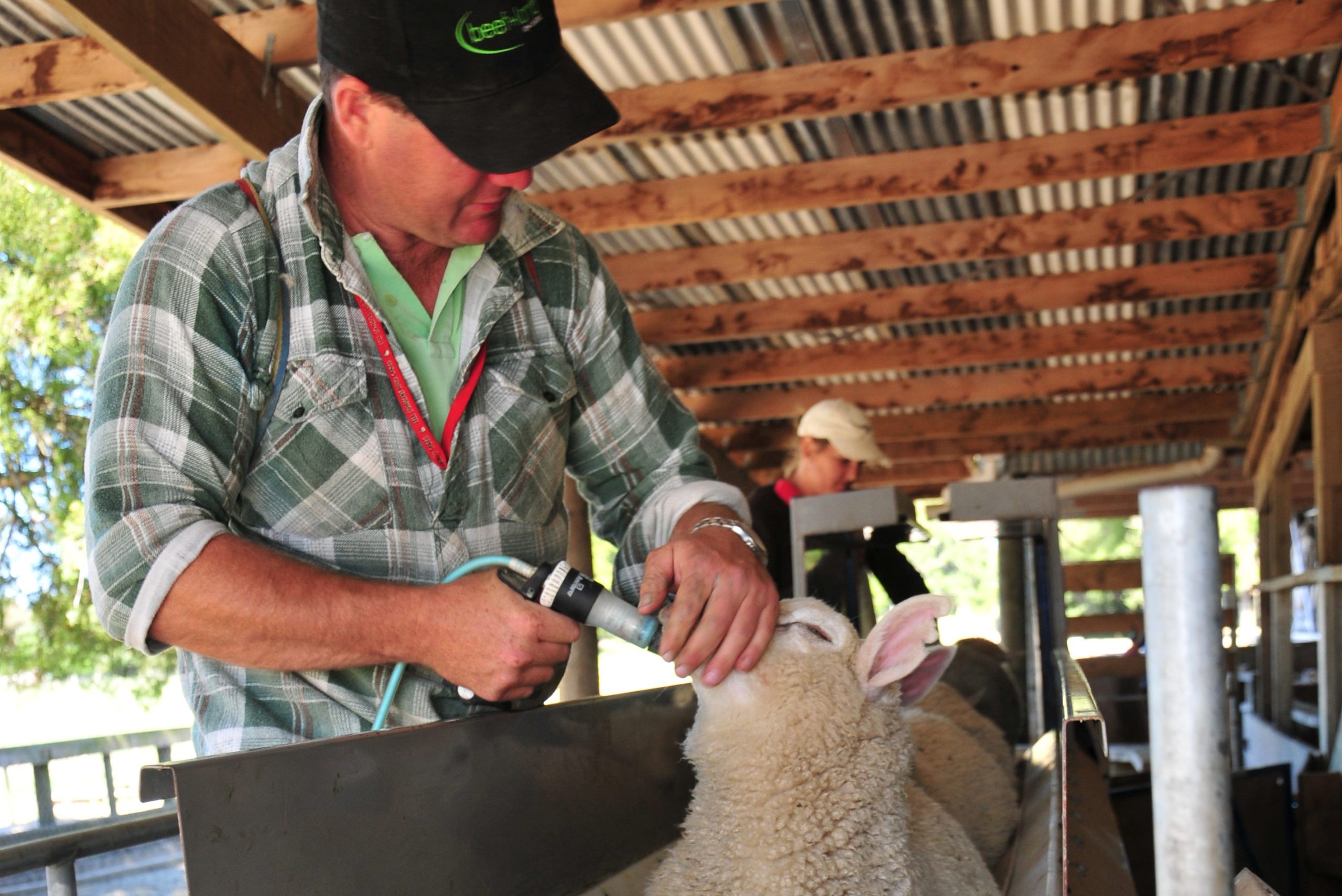
By only drenching selected animals, farmers are reducing the percentage of the worm population being exposed to drenches at regular intervals. The Smartworm app identifies animals, in real time, that are most likely to require a drench, a concept known as targeted selective treatment (TST).
Two trials of the Smartworm app, (funded by Beef + Lamb New Zealand and overseen by Dave Warburton from Vet Services Hawke’s Bay and Andrew Greer from Lincoln University) showed there was up to a 57 percent reduction in drench use without any significant negative effects on the productivity of lambs.
Reducing the total amount of drench used on lambs will result in cost savings in both drench and labour. Across both trials, the Smartworm app saved participating farmers between $0.59-$0.65 per lamb in drench and labour costs.
Animals in both trials were drafted into two groups; the control groups – which received regular treatments every 28-30 days – and TST groups where the Smartworm app was used to determine which animals needed drenching at each interval.
To use the Smartworm app, lambs need an eID tag and the app then uses liveweight gain and other farm data to determine which animals need drenching.
“The data from our farm showed that only about half the lambs needed drenching, which was exciting as it aligned perfectly with our objectives of reducing our overall drench use.” – Mark Guscott, Wairarapa
In his summary of the second trial, which included farms across both the North and South Island, Dave Warburton said using the TST methodology via the SmartWorm app can be appropriate for use under NZ farming conditions.
He said the optimal balance of lamb growth and reduced drench use is more likely when the farm is being managed to maintain low pasture larvae contamination, therefore, additional management strategies such as leader-follower grazing systems, grazing area swaps and use of novel forages, crops and re-grassing need to be employed to manage pasture contamination and minimise self-infection of lambs.
Wairarapa farmer Mark Guscott, who took part in the initial trial, said that once they had worked through the initial startup tech issues, the app was straightforward to use.
“The data from our farm showed that only about half the lambs needed drenching which was exciting as it aligned perfectly with our objectives of reducing our overall drench use,” says Mark.
Fast Worm ID test fast-tracks parasite identification
A recently released DNA-based test can identify internal parasite species from faecal samples in under three days, allowing farmers to make informed management decisions that protect both stock performance and drench efficacy.
Fast Worm ID-GIN PCR was developed for sheep and cattle by B+LNZ in partnership with Awanui Veterinary. It was made available to farmers earlier this year. Since launch, more than 300 tests have been completed and over 40 veterinarians have taken part in training, demonstrating strong early adoption and demand for faster, more accurate parasite diagnostics to support better on-farm decision making. The development of Fast Worm ID is an example of B+LNZ investing farmer levy funding into practical tools that deliver direct benefits on-farm.
Unlike traditional larval culture tests which can take up to two weeks, Fast Worm ID will get results back to farmers in under three days so they can detect parasite infections earlier and take a targeted approach to treatment.
The test has been developed and validated in New Zealand and is designed to work alongside faecal egg counts (FECs). It can detect very low levels of infection and provides clearer information about which worm species are present, giving farmers greater confidence in parasite management.
Farmers can access the test through their veterinarian using the same sample process used when collecting FECs.
The Smartworm app was developed in Ireland by Cotter Agritech and is now available in NZ.