A wild weed
The rural community are great at stepping up, helping out beyond their farm gate. These five legends are tackling arguably New Zealand’s biggest weed problem – wilding conifers. While some of us throw our hands in the air and call defeat, these farmers, foresters and fighters have taken on the problem and made it their own. As Ket Bradshaw puts it, together we can make a first step on something that is daunting. Words Jo Grigg.

Listen on the Country-Wide Podcast:
Wilding conifers on 50,000 hectares (ha) of Marlborough high-country are raining seed south into Molesworth and Muller Station, with devastating results. The Branch-Leatham site is one of the worst tree infestations in New Zealand. The area was hand planted as part of land stabilisation forestry trials in the 1960s and has been in the ‘too-hard-to-control’ basket for the Crown, ever since. A helicopter flight shows swathes of green that look like beech but it’s Douglas Fir and Contorta, moving up into tussock country.
Lobbying by the South Marlborough Landscape Restoration Trust has focused on getting the right people in government and public service motivated to fund work in this DOC-managed area. A recent breakthrough has been Rata Foundation funding, to help the Trust prepare a work plan and a case for funding. Work is estimated to cost in the millions. Jo Ritchie, Wilding Pine Network Co-ordinator, is working on the problem at a nationwide level. “Wildings are one of the most significant biosecurity issues because they stretch from the mountains to the sea. It affects three parts of the economy – farming, forestry and tourism.”
Wilding conifers now outstrip commercial conifer forest plantations. A 2024 report in the Journal of Forestry said wildings cover 2.5 million ha (as of 2022) compared to 1.8 million in the plantation estate.
Government funding in 2024/25 is down to only $10 million a year, which is a 75% reduction. Around $30 million to $50 million per year is needed to fund the nationwide wilding control programme.
Ritchie said Government funding is especially vital as it is used to leverage off other sources, such as sponsorship, philanthropy, in-kind and industry. Cuts mean that summer work has been restricted to maintenance, not new ground.
The lobbyist
He should probably spend more time on his boat but retired famer Johnny Oswald spends hours lobbying the Government on wilding conifer issues. Johnny had an epiphany moment towing home a Lidgard boat in his Toyota Coop, through Waiouru in 1975. “I saw these little trees and wondered what they were, then discovered they were Contorta and a major problem for army training.”
This coincided with Awatere Valley farmers, of which he was one, trying to keep their farms outside the Catchment Board and Forest Service jurisdiction. “The reason was the Forest Service was planting Contorta in the neighbouring Wairau Valley and I knew they would be a problem and tried to stop them. What the hell they were doing.”
Johnny has a quite famous letter in the wilding pine world, from then Prime Minister Rob Muldoon saying that the Forest Service had assured the Noxious Plants Council that if Contorta became a noxious problem, they would pay to remove them from the Wairau area. This promise has been forgotten, he said.
Roll on 50 years and Johnny still feels progress in understanding the wilding issue in Government is slow. As he was only a 20-minute flight from the Beehive, he thought he’d go and meet a few people. The lobbyist was born. “Eugenie Sage was my first stop and we flew her into the Branch-Leatham. She gave me a list of the people I needed to talk to.”
Johnny has made six lobbying trips to Wellington so far and Minister Hoggard is set to visit the Branch-Leatham in October. Johnny rates voluntary community groups as really driving wilding control. There are 29 Wilding Trusts doing a lot of work, he said, but they need funding support. Johnny has been Chair of the South Marlborough Landscape Restoration Trust for six years.
One of his ideas is to fund wilding control from the International Visitor and Conservation and Tourism levy. “We found out that $7 million given in 2023 for wilding work, was a direct result from our lobbying, and it was raised via the Visitor Levy.”
If they increased the Levy by eight dollars per head, from $35, this would bring in $20m per annum which is what we need urgently, he said.
“We’ve recently put a submission in to keep $8m set aside for the National Wilding Programme.”
The doer
It takes a bit of charm to run a social media campaign interviewing people with a wilding pine branch as a microphone. Pete Oswald, skier and entrepreneur by trade, and self-titled passionate environmentalist, has been project manager for the Central Otago Wilding Conifer Control Group for 18 months.
He said much of his work is engaging with the farming community, a natural fit being raised on a farm (he’s Johnny Oswald’s son). Luckily, as well as project management, he’s not afraid of getting his hands dirty. His strategy to get buy-in with landowners is to turn up on farms and pitch in with the farmer to control wilding trees. “They hustle in neighbours and I grab some board members, and we get the job done and develop the relationship.”
Funding has dropped from $630,000 two years ago to $184,000 this year so he’s had to go DIY, he said. “I spend a lot of time understanding what farmers need, get alongside and work on organising alternative trees for replanting.”
He understood that some farmers have 40-year-old Contorta shelter belts and had various reasons for not wanting to remove them, such as time, shelter and cost. Farmers appreciate being told about the tools and control options, he said. “They say, fantastic, now I know what I need to do.
“Farmers go from a place of despair to being more hopeful, as they have a strategy.”
Controlling Contorta or radiata is a very different strategy to broom and gorse, he said, with a shorter maintenance period. It usually needs controlling between three and 12 years, depending on species and elevation.
He said action in many areas of Central Otago is needed now, as Cortorta is exploding. On the Pig Route there is a farm only just bought back from the brink of being taken over, thanks to funding, he said. “We have farmers on the brink of Contorta explosion but they don’t realise it.”
The forester & the advocate
Ket Bradshaw has just biked 1500km from the Marlborough Sounds to Milford Sounds to raise awareness about wilding trees. She stopped at affected areas and talked with people and communities. “It’s all about the people.”
As a longtime forest owner, it wasn’t until she holidayed in the Marlborough Sounds that she noticed the displacement of bush by Radiata invaders. Then she had a horrifying tramping battle up a high-country ridge in Marlborough’s Branch-Leatham, getting “ripped to shreds” by Contorta and Douglas Fir. “When I hit the riverbed, instead of beech seedlings it was a mass of little Douglas Fir.”
She has since taken up working in wilding control, as the Coordinator of the South Marlborough Landscape Restoration Trust and Deputy Chair of the Wilding Pine Network. She still owns and manages exotic forest and sees forestry as part of the solution. “My approach to forestry has been hugely influenced by my involvement in wilding pine management.”
In her paper in the New Zealand Journal of Forestry (May, 2024) she calls for the forest industry to manage and fund the removal of seedling spread from its own plantation estate, as well as the seed rain emanating from it.
“Forestry is similar to where the dairy industry was years ago, when it was recognised that effluent storage and leaching controls should be taken on and born by the industry. While it’s cheaper to make everyone pay, we need forestry to move from reactive to proactive.”
The Forestry Owners Association rejected a call for a forestry levy to contribute for wilding work. Prior o 2023, plantations for carbon sequestration could be planted without meeting National Environmental Standards for commercial forestry. This forestry type is now subject to updated rules.
She has a message to landowners wanting to get involved in controlling wildings. “Join a community group, as you get energy from working with others. Together you can make a first step on something that is daunting.”
Keep pressure on Mackenzie trees
The Mackenzie District has had the lion’s share of wilding control funding but there is plenty still to do. From 2016 to 2023, 50% of the total funds were spent in Canterbury and, of these, 50% were directed to the Mackenzie.
Ross Ivey, Chair of Wilding Free Mackenzie, said that Stage 1 was containment of existing hot spots but, in no way, is the job done. The next step is destroying seed sources, he said. An example is the very visual problem with Contorta along the Twizel to Aoraki highway. “While $20 million dollars has been spent here so far, it’s only contained it.”
There is a 40:1 cost benefit for Contorta work, he said. Ivey is heartened by the recent response from central Government and LINZ officials, following personal letters being sent to new Ministers. He agrees with comments made by Hon. Hoggard, at a Marlborough woolshed tour, that cheaper techniques to control wildings are needed.
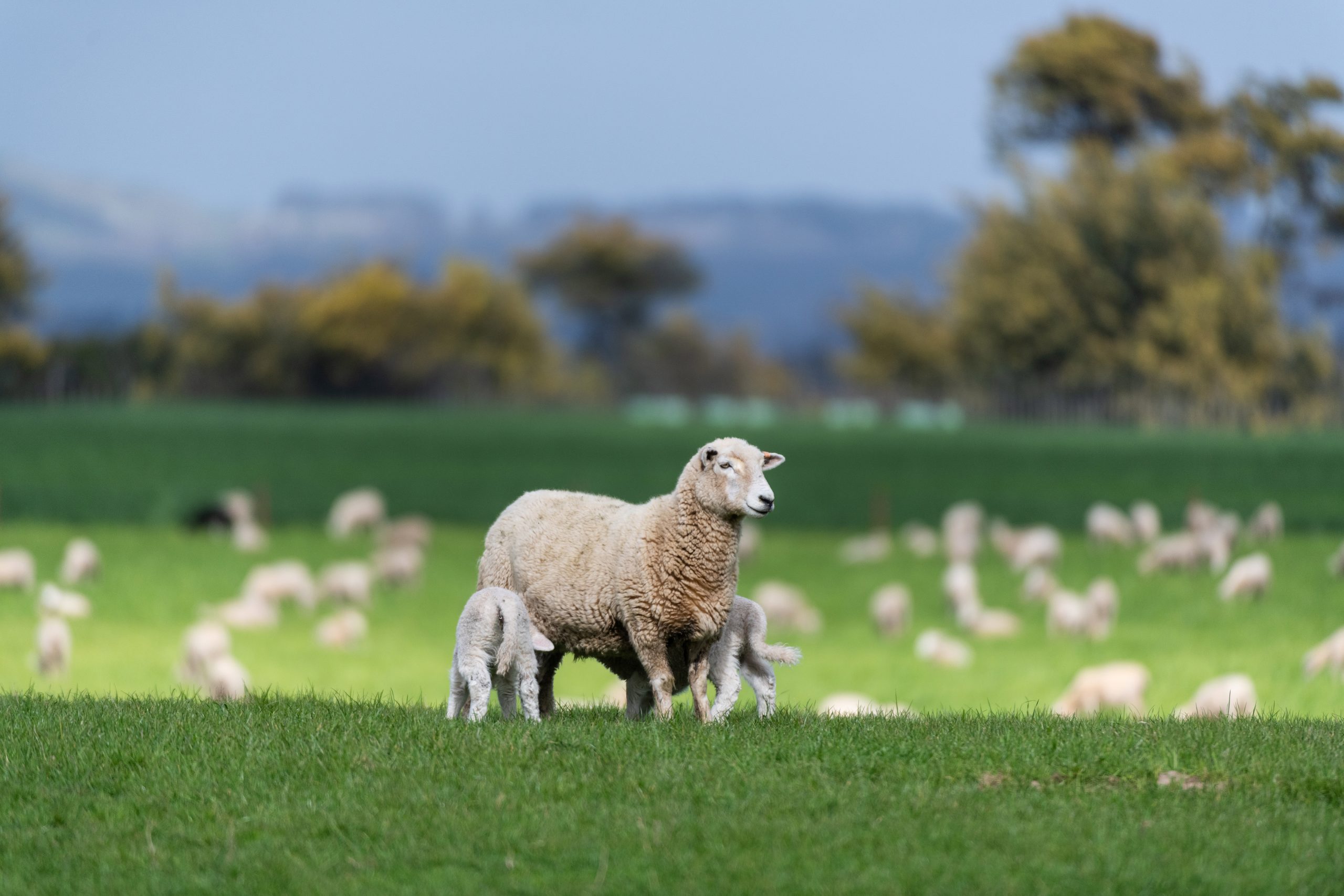
Hoggard also mentioned the possibility of re-introducing sheep to areas where they have been removed, as a successful control mechanism.
Ross said the benefits of grazing were very evident when you look over the fence between grazed and ungrazed areas. “All the retired areas are exploding in trees and grazing is the most obvious tool.”
The Trust works in partnership with MPI, ECAN, DOC and LINZ with the biggest role being advocacy, especially to central Government. It also acts as a watchdog over the spending of the money by ECAN via Zolve, he said. “I’ve been quite proud of what we’ve achieved.”