Get the best returns at the best time
Smart technology is enabling farmers and growers to not only optimise their solar electricity use, but also allows them to optimise returns from selling power back to the grid at the right time. Words Anee Lee.
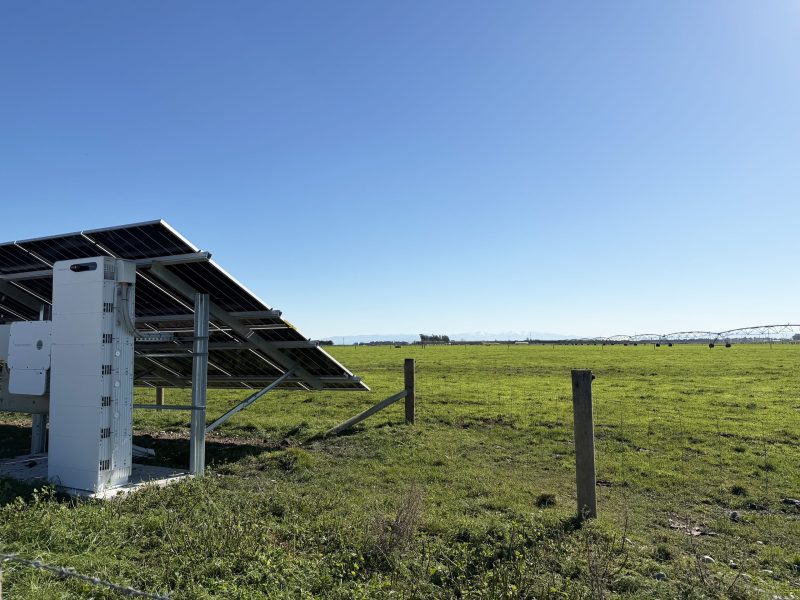
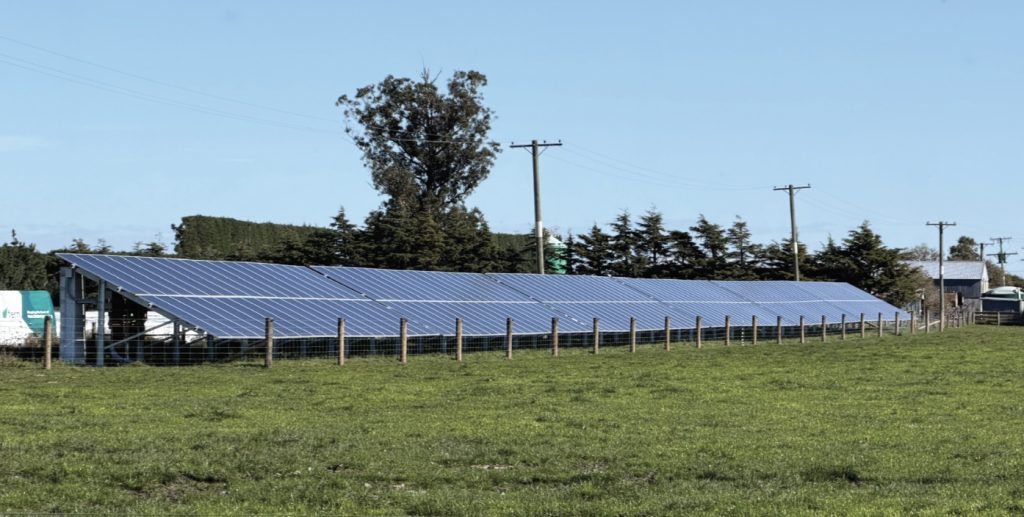
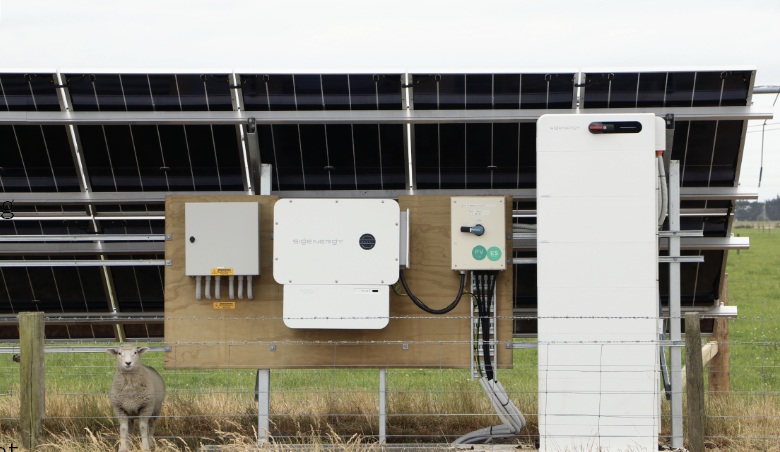
The price, efficiency and capacity of batteries for solar systems has come down over recent years and there’s a similar story for solar panels, says Farmlands FLEX chief executive and founder Andrew Pegler (Pegs).
It means more farmers and growers are now installing both and that’s helping them shift power from times of peak supply generation, while the sun is shining, to periods where there’s demand but supply may not match it.
The smart software that Pegs and his team have developed as part of Farmlands FLEX, is now taking that a step further, allowing users to optimise the flow of electricity automatically to where they’ll get the best returns, including selling it back to the grid.
The software enables users to become electricity traders without adding any complexity to their business or daily lives.
“If electricity is cheapest to use now on site, the software directs energy that way but if it’s more valuable to take it and store it in a battery to trade or use later, then it directs it there. It can then send it to the grid and carry out the trade to get the best return.
“The software makes those decisions based on your situation on farm and what’s happening in real time on your site while taking into account what’s happening in the spot electricity market.”
It optimises the direction of energy flows moment by moment on the basis of not just meeting the farmer’s specific energy needs but also their ability to maximise returns by participating in the energy market. The Farmlands FLEX system makes it simple.
“Farmers already have enough to do without being an energy trader. The market moves every 30 minutes and who has time to be on top of that?
“We’re taking the solar and batteries and harnessing them with the FLEX technology to enable a new revenue stream by trading. Essentially, they have an energy trading desk in their system,” he says.
Optimising returns and minimising costs all help to improve return on investment (ROI) for the solar setup and reduce payback time.
Pegs says although each situation is unique, a typical ROI is 13–16% and payback periods tend to be 6–6.5 years, with some dropping down to five-year paybacks thanks to the added benefits from the optimisation software. The Farmlands FLEX system is an end-to-end service, so as well as the smart software, it provides full solar infrastructure too. That starts with design and modelling of systems to meet a farmer or grower’s specific needs in their location. Installation of solar panels and batteries is carried out along with the installation of the automated trading desk software.
“Farmers who have already started their solar journey can still utilise the trading desk software with the “Get FLEX’ product. We can integrate it so they can then monetise their systems effectively too.”
Pegs has more than 25 years’ experience in the energy sector and says energy prices look set to climb as demand continues to grow, while supply and investment in national infrastructure fails to keep up.
The national grid, while accessing renewable hydro-generated electricity, can’t meet demand with that source alone and has to rely on coal for more than 20% of its daily generation, Pegs says.
“You’re kidding yourself if you think prices are going to head anywhere other than north.”
Prices of other energy sources are also highly volatile with diesel prices hitting highs close to double what they were just a few months ago.
Prices for solar infrastructure, on the other hand, have fallen.
“Fourteen months ago, you were talking $1000 – $1200/kilowatt hour (kWh) installed for batteries. Now it’s more like $600.
“You’re kidding yourself if you think energy prices are going to head anywhere other than north.” – Andrew Pegler (Pegs), Chief Executive, Farmlands FLEX
“That changes the financial dynamics. It used to be that batteries extended the time to payback but we can now reduce that by being able to store and monetise the energy.
“And much like the life expectancy of panels increasing from 20 years to 30 years, the technology in the batteries has improved too, so that instead of a battery cycling once-a-day for 10 years we can now expect 14 years from them.
“If you run batteries in an optimised way, you not only get a day-by-day benefit but a lifespan benefit as well.”
Pegs says that while solar panels on their own are good, they’re not the full solution to managing energy costs and resilience. Batteries add resilience by being able to store energy for the times the sun isn’t shining whether that’s early in the morning or later at night. They also create the ability to maximise returns from trading.
“We’re very much advocates of battery led, solar enabled systems,” he says.
Doing nothing to shore up energy supplies for a farm or orchard business is to accept increasing risks in terms of both consistency of supply and cost of supply. Operational risks rise because of an increased chance that necessary activities can’t be carried out due to power outages. Operating cost risks also rise from exposure to volatile energy markets if energy is solely being sourced from the grid or via oil-based fuels.
Animal welfare and security are also put at risk with power outages from the grid resulting in no power for electric fences or water pumps and no power for activities such as milking. Even if generators can be shared between farmers for milking, albeit at disrupted milking times, milk chilling still requires 24-hour power supply as does electric fencing.
Pegs is a strong advocate for staying connected to the grid to enable optimisation of returns and energy trading. It also enables a wider opportunity for rural users in aggregating supply.
He points to the Australian experience where high uptake of solar technology, without management of energy flows back to the grid, have resulted in downward pressure on electricity prices paid back to users.
At certain times of the day, particularly in Western Australia, the price paid to solar suppliers has dropped from 14-15cents/kWh to zero, he says.
“There’s too much solar generated electricity being dumped into the grid at a time when the grid doesn’t need it and that creates a problem.” – Andrew Pegler (Pegs), Chief Executive, Farmlands FLEX
“The reason is there’s too much solar generated electricity being dumped into the grid at a time when the grid doesn’t need it and that creates a problem.”
Batteries and the Farmlands FLEX trading desk software can help prevent that kind of issue.
“What’s even more powerful though is if we can aggregate say 10 farms in a local area and offer their stored loads back to the grid during peak load demand periods – when urban customers for instance are at home in the evening cooking dinner and turning the heating on.
“That aggregated energy is valuable to the grid and is therefore valuable as an income stream to the farm suppliers. It’s giving the grid the energy it needs without them having to build expensive generation infrastructure.”
Some rural energy loads are seasonal, so a packhouse facility, for instance, may see a doubling or even quadrupling of their load requirements during the months they’re packing and storing but when that demand drops outside of those times, they can trade energy back to the grid, Peg says.
Staying connected to the grid is important and the aim shouldn’t be to go ‘off-grid’ to save line fees, he says.
“There are negative social implications of coming off the grid too. If you come off, the local lines company just divides the total cost by your neighbours who are remaining so their charges go up.” Pegs says one of the benefits he saw in partnering with Farmlands to create Farmlands FLEX is that customers also have a long-term partner in the co-operative.
“They have that reassurance that they’ve got a long-term partner with this long-standing cooperative so there will be a team there alongside them through the lifetime of the system.”
That’s important given the number of players in the market.
Visit flexenergy.co.nz